Equipment Communication System
I developed a new approach to how riders encountered, navigated, and understood complex equipment ranges within the physical retail environment.
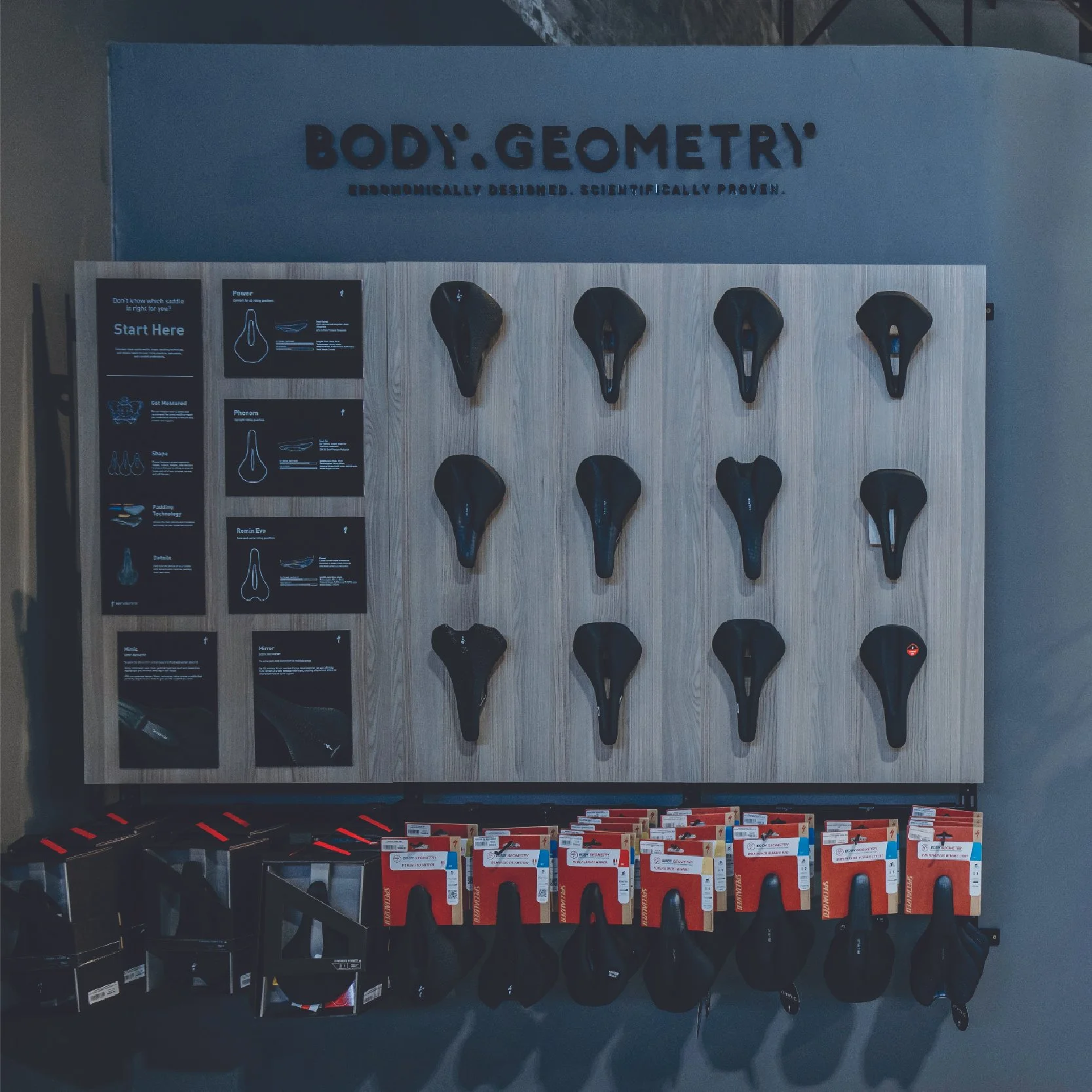
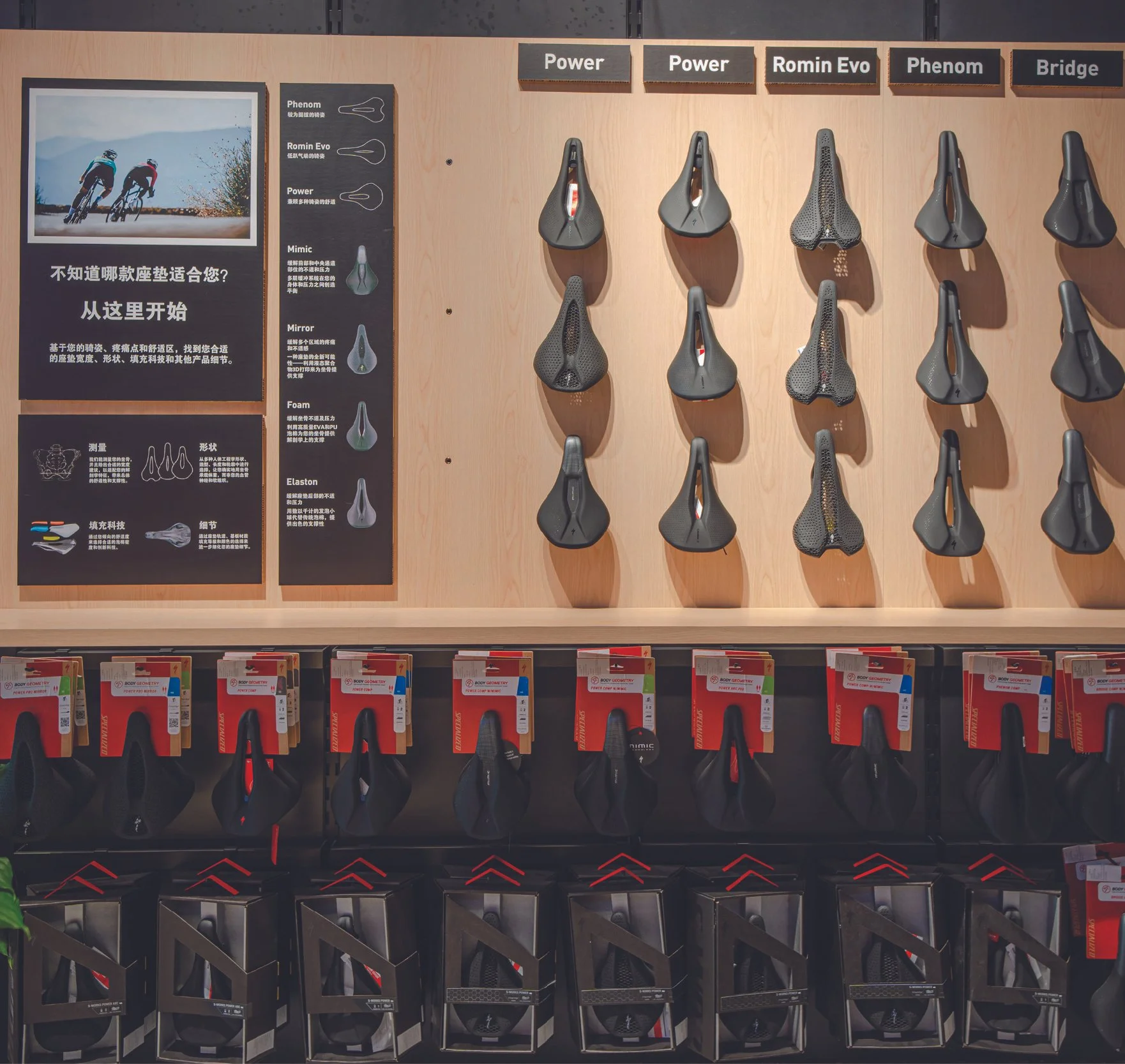
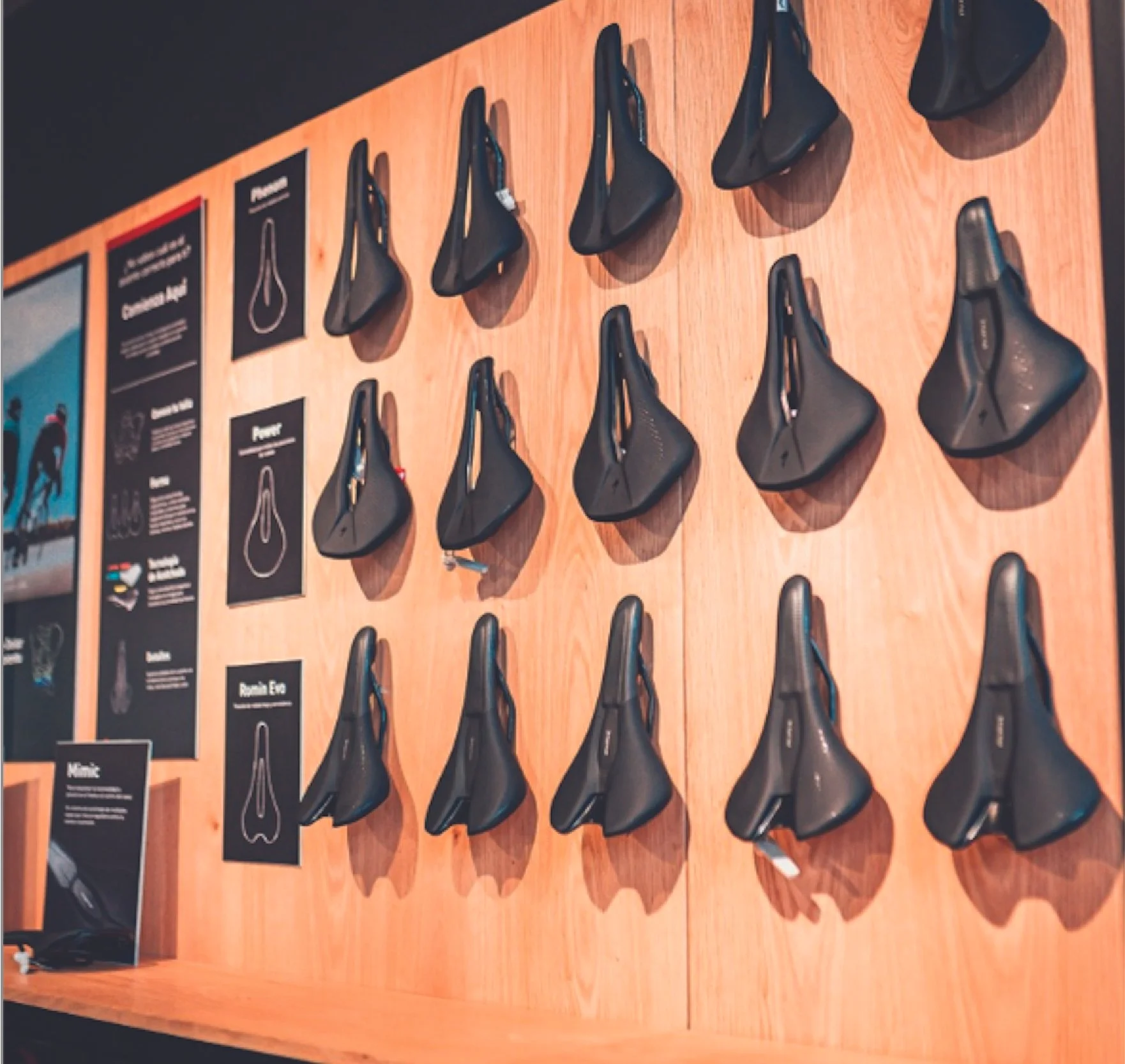
The work began with the Saddle Innovation Wall, an initiative I identified and led from strategy through global implementation. I developed the information hierarchy, retail experience approach, and scalable system, working with cross-functional teams to translate the strategy into a physical retail experience.
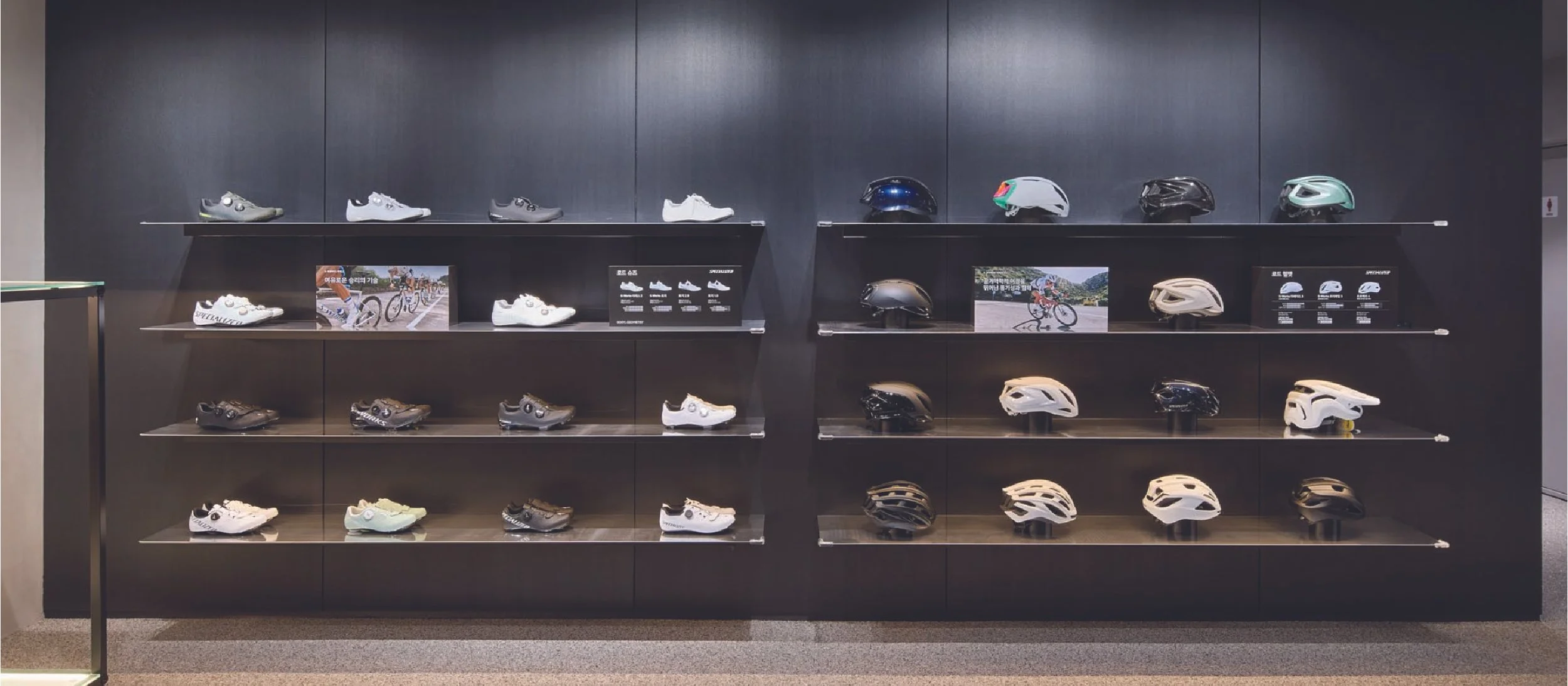
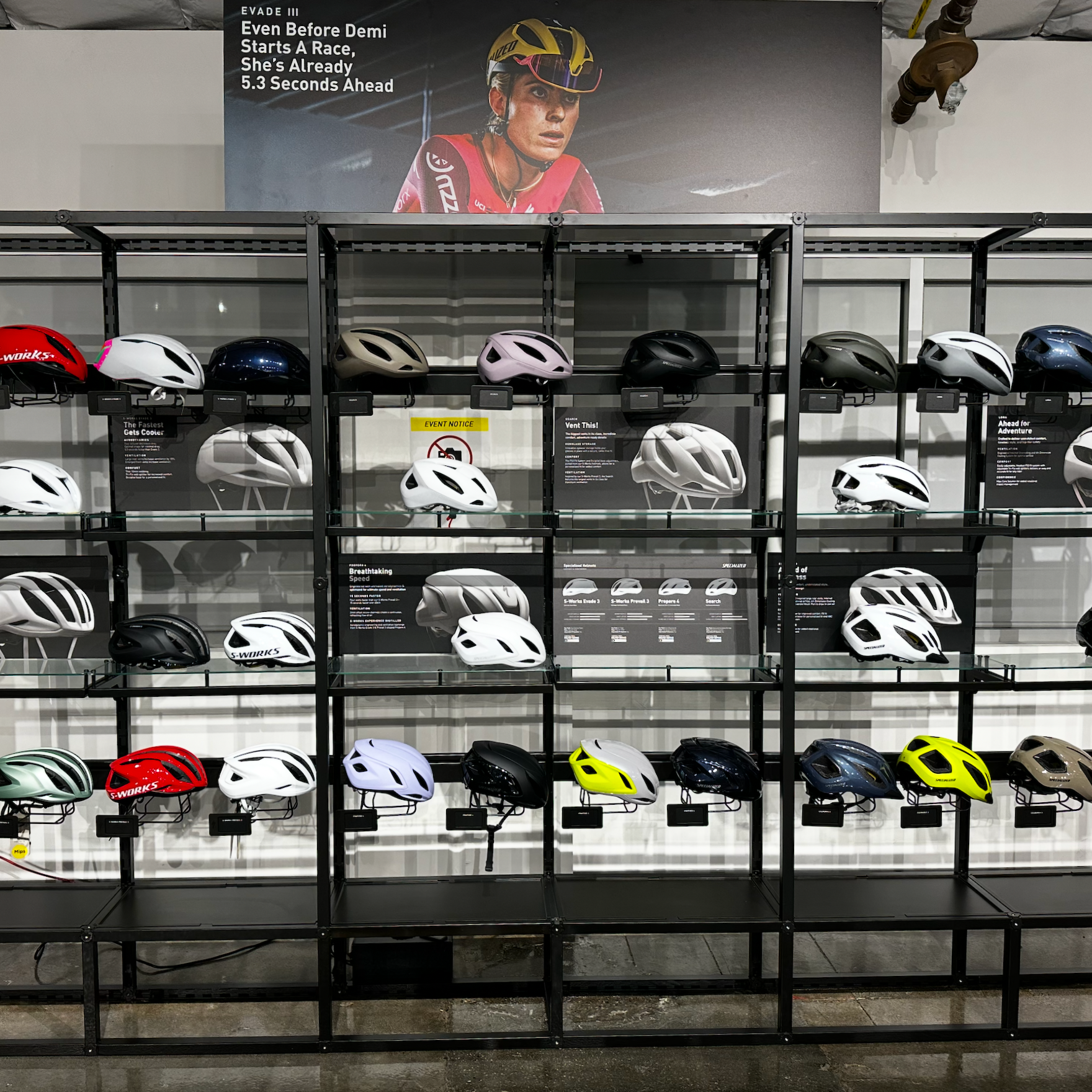
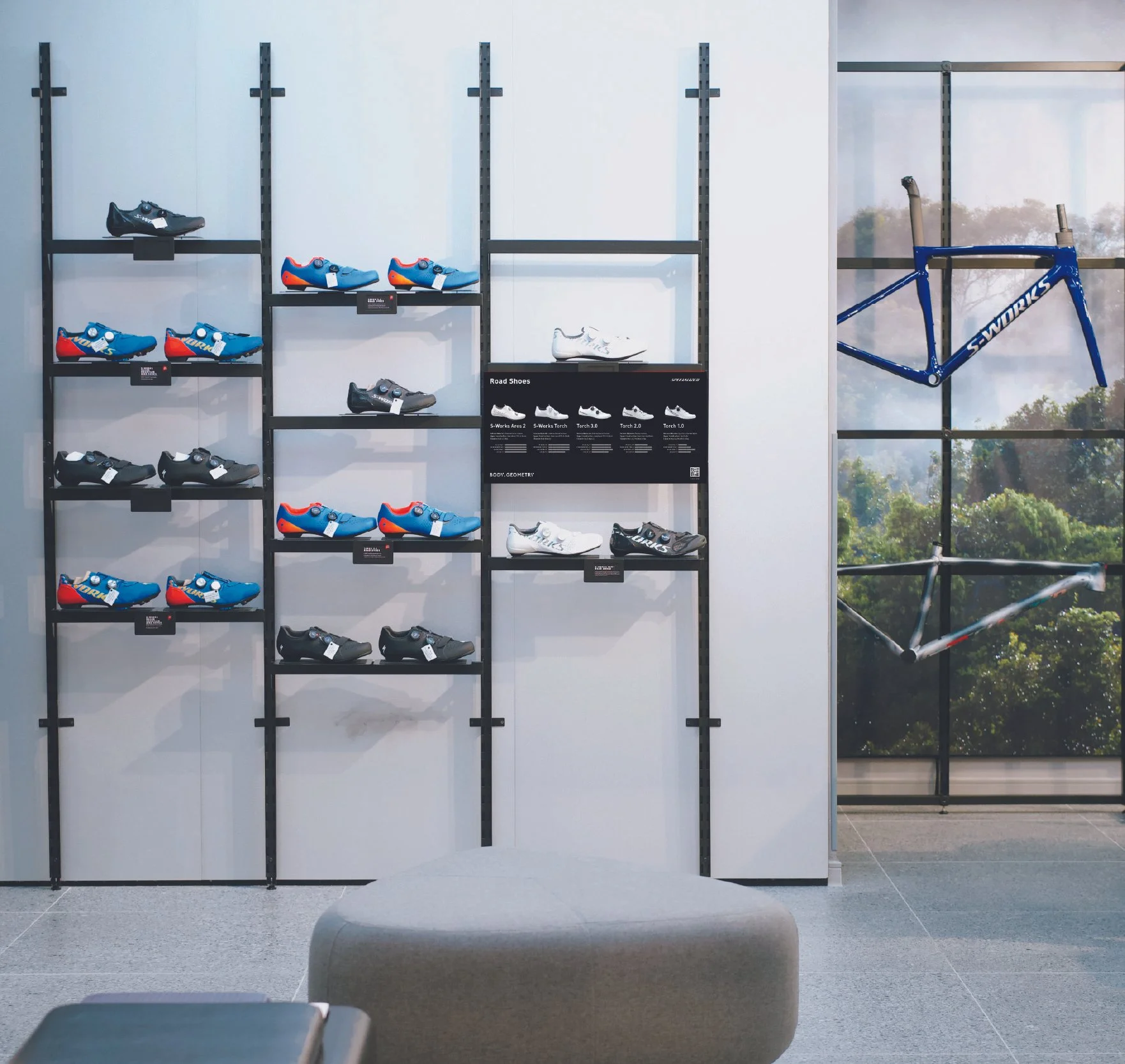
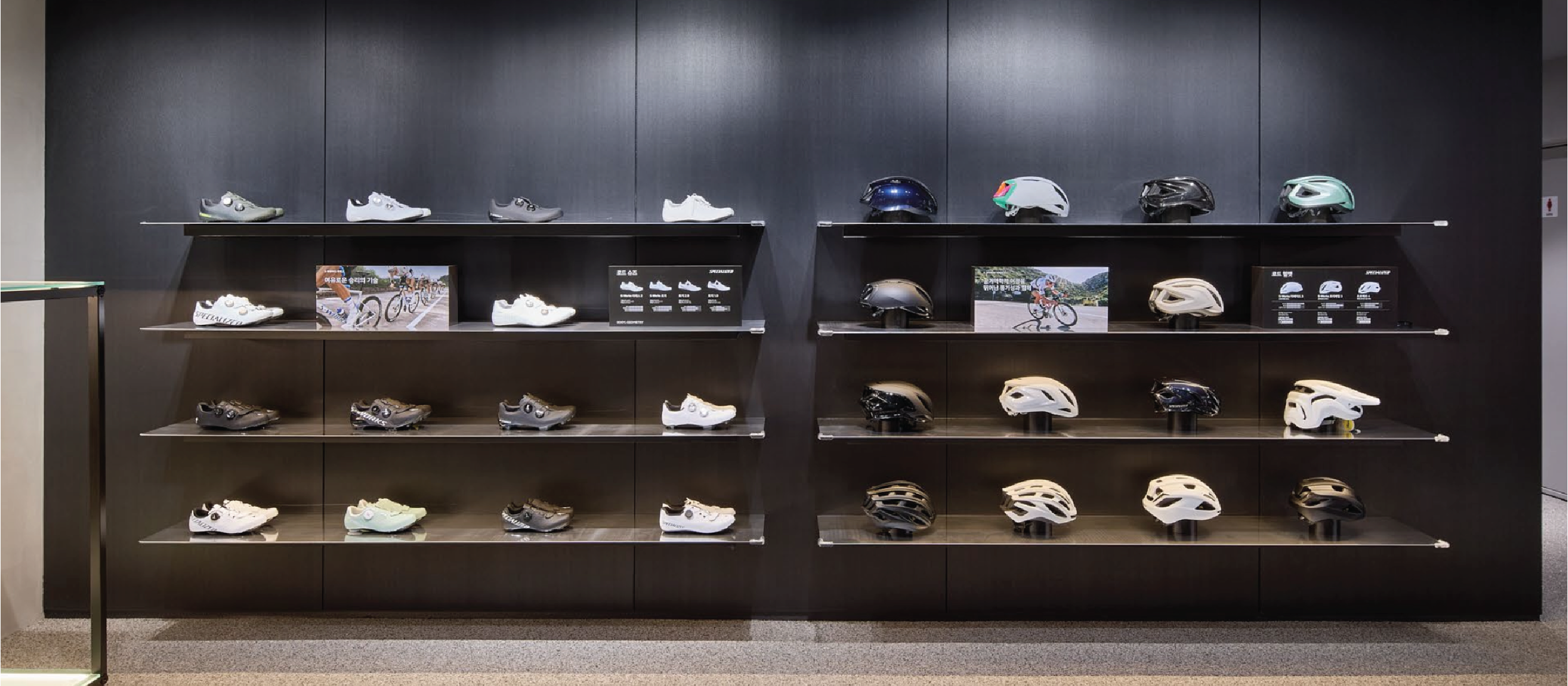
I later applied the same thinking to equipment differentiation, creating a visual system that helped riders understand the differences between products and make more confident decisions at a glance.
My Role: Strategy · Information Architecture · Creative Direction · Retail Experience
01 | The Challenge
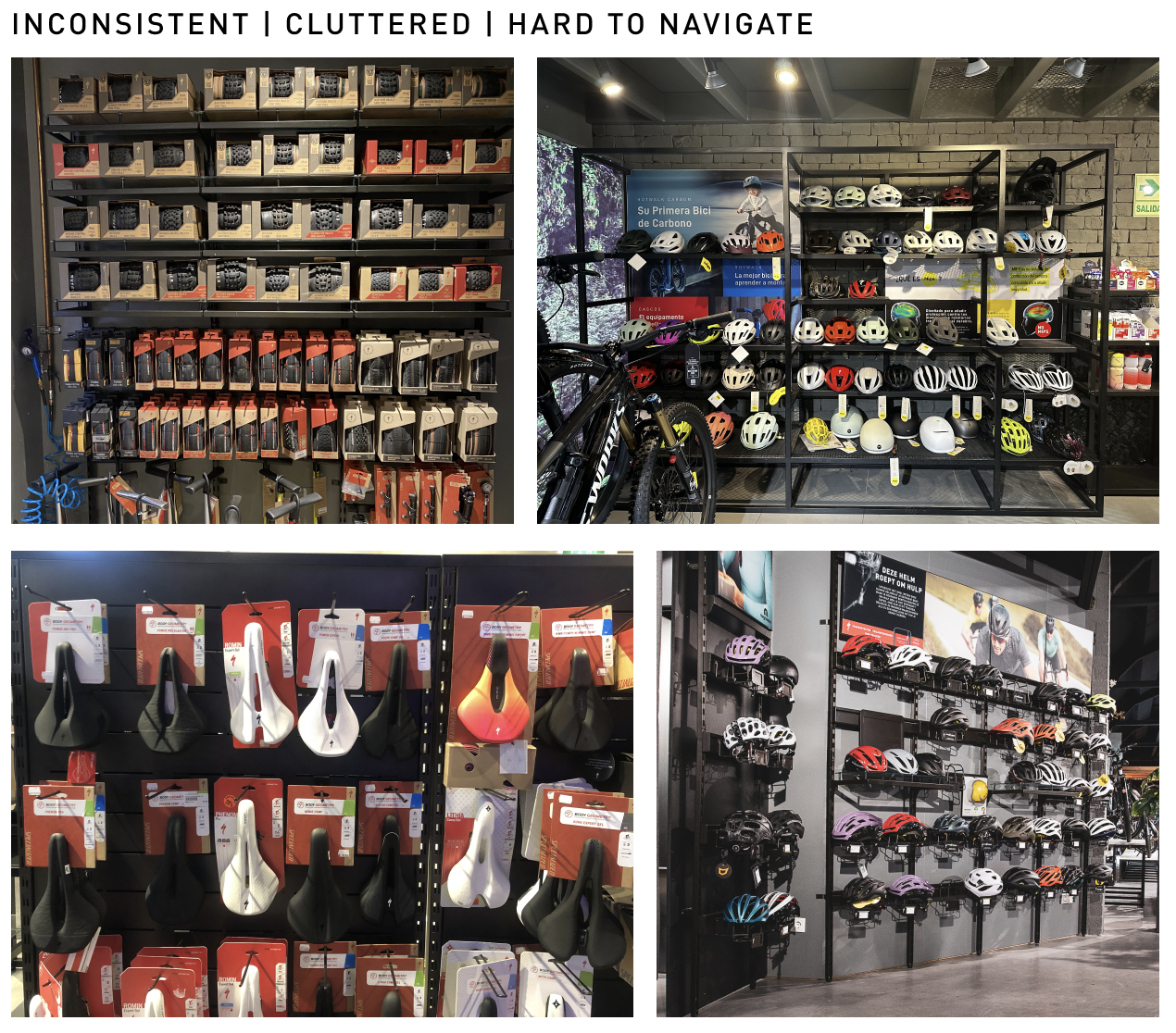
In-store saddle and equipment displays were inconsistent, cluttered, and difficult to navigate. The range across saddles, shoes, tires, and helmets was broad, with significant differences in price, technology, performance, and intended use. Riders could be looking at dozens of products without a clear way to understand how they differed or which options were relevant to them.
I started with saddles because they presented the most complex communication challenge. A rider could walk up to a wall of saddles ranging from $50 to $450, from comfort-oriented and cruiser saddles to high-performance race saddles, with little information to help differentiate them.
Saddles also presented a more personal challenge. As a direct point of contact between the rider and the bike, saddle shape, fit, and technology can play an important role in addressing discomfort or pain. Those experiences vary significantly from rider to rider and are not always easy to discuss with a salesperson. Riders needed a way to explore the differences and understand their options in a more approachable, self-directed way.
Similar challenges existed across shoes, tires, and helmets, where the depth of the range and complexity of the technology could make the category feel overwhelming.
The opportunity was to create a clearer way for riders to navigate complex equipment categories, understand what mattered to them, and confidently move toward the right product.
02 | The Opportunity
I saw an opportunity to create a clearer path through the equipment range by organizing information around the questions and needs riders actually have.
Starting with saddles, I worked with Product and retail teams to clarify product differences and translate technical information into more approachable messaging.
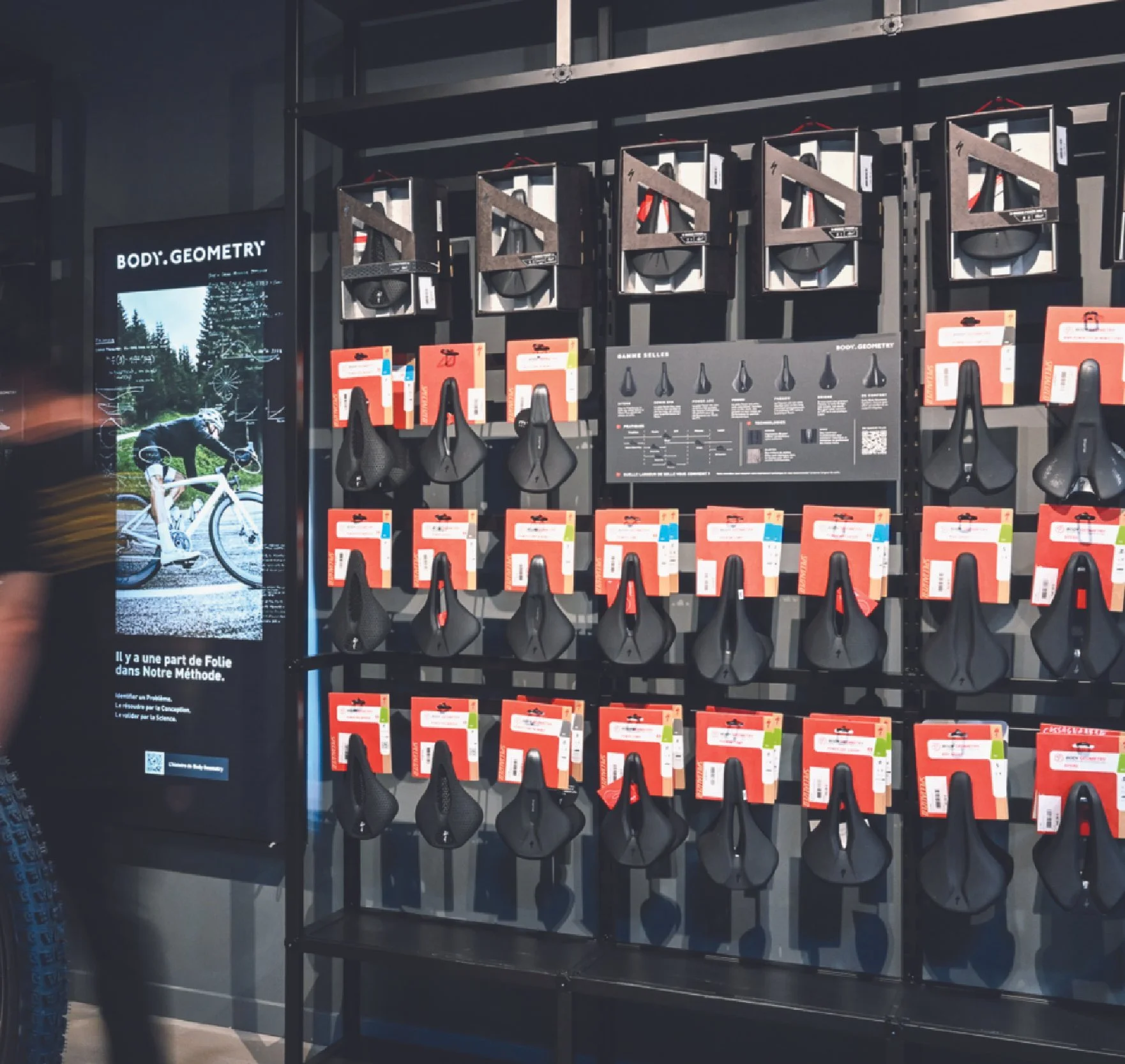
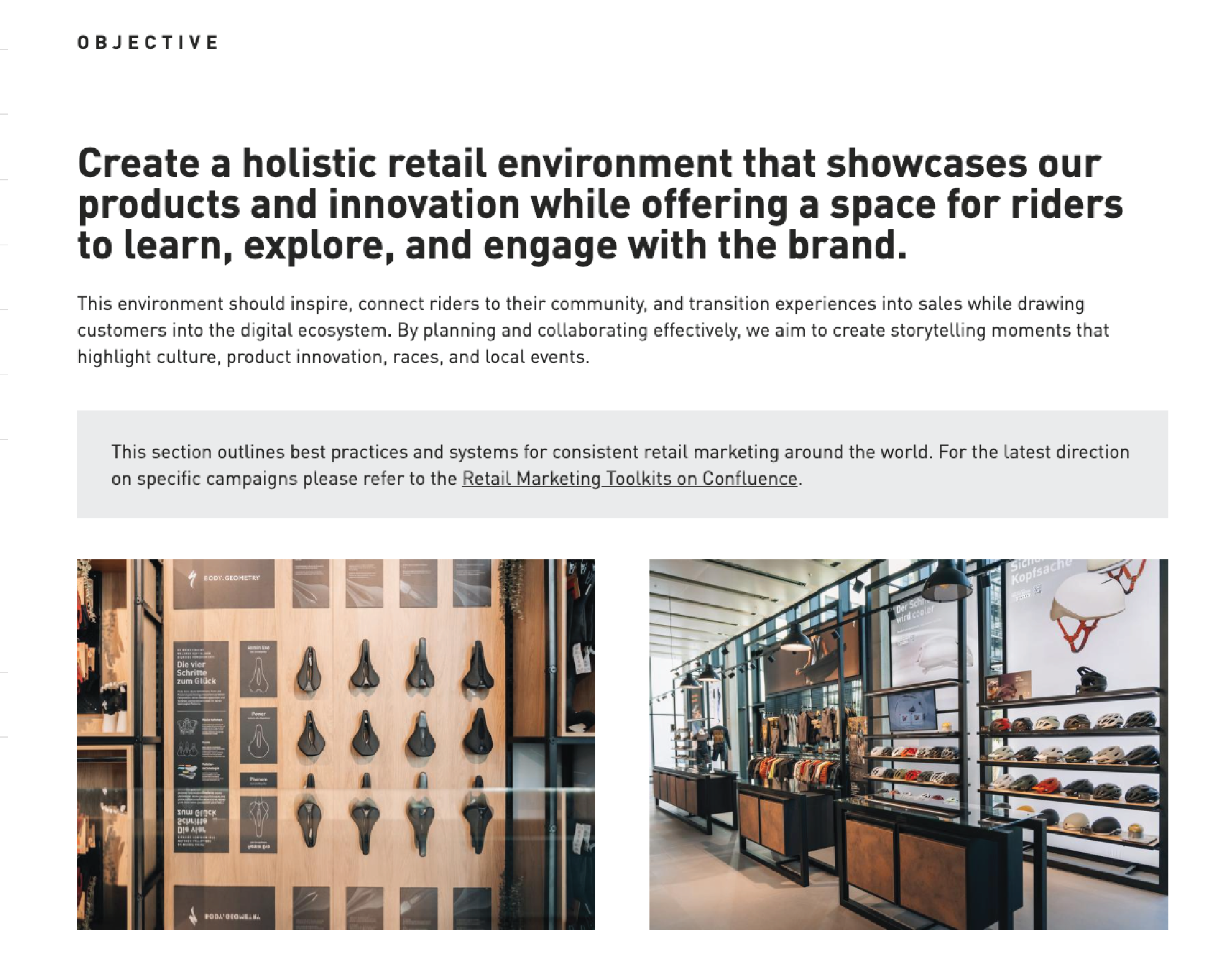
The physical experience was equally important. Riders could pick up, touch, and compare saddles, experiencing differences in shape, texture, and padding for themselves. This made the category more approachable while encouraging hands-on exploration, demos, and conversations with retail staff.
The framework was designed to scale beyond saddles, creating a consistent approach to communicating complex equipment categories while allowing each category to address its own product differences and rider needs.
03 | The System
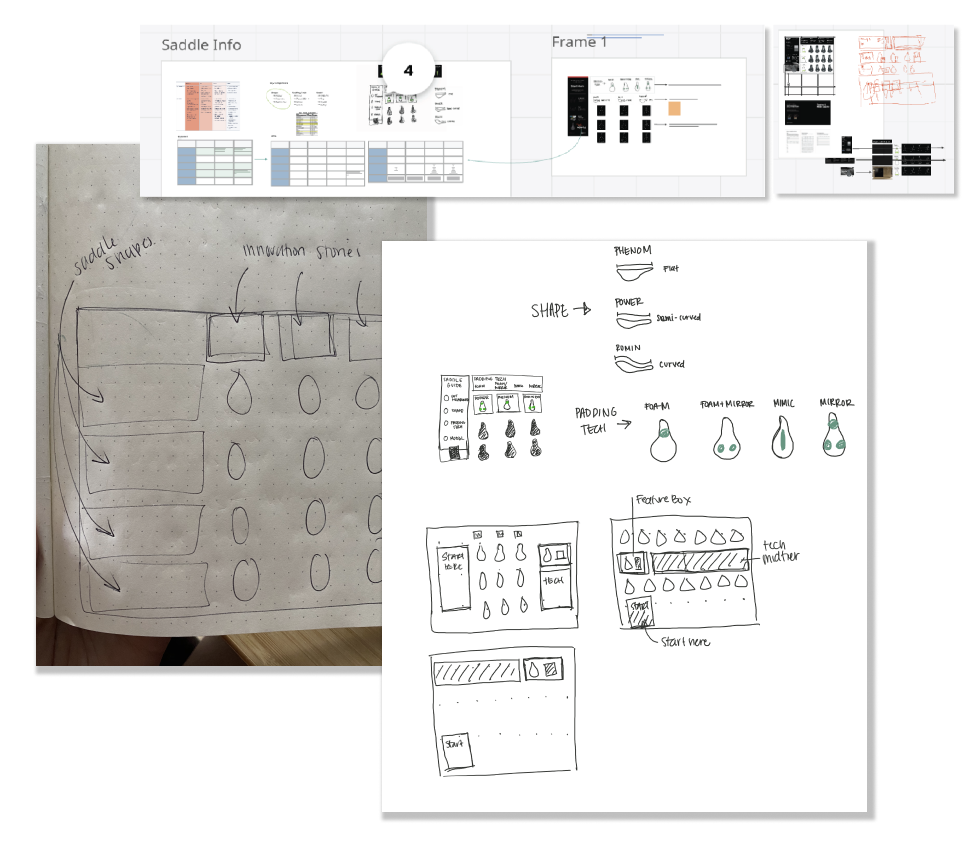
I developed a framework for how Specialized’s equipment categories could be encountered, navigated, and understood at retail, starting with saddles and expanding across shoes, helmets, and tires.
I audited stores across the U.S., Germany, and the Netherlands and gathered input from store teams, shoppers, and riders to identify gaps in product communication, merchandising, and the overall shopping experience.
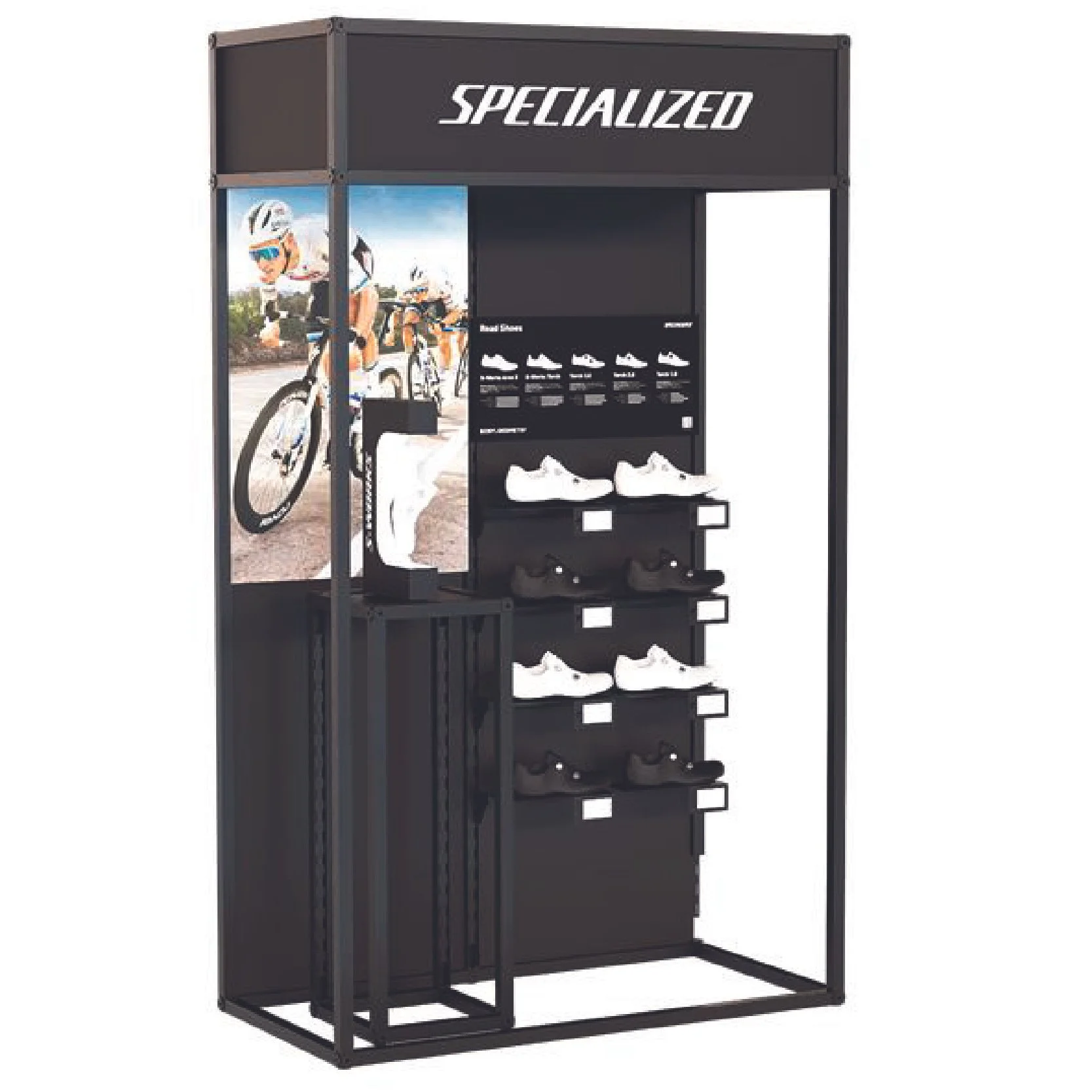
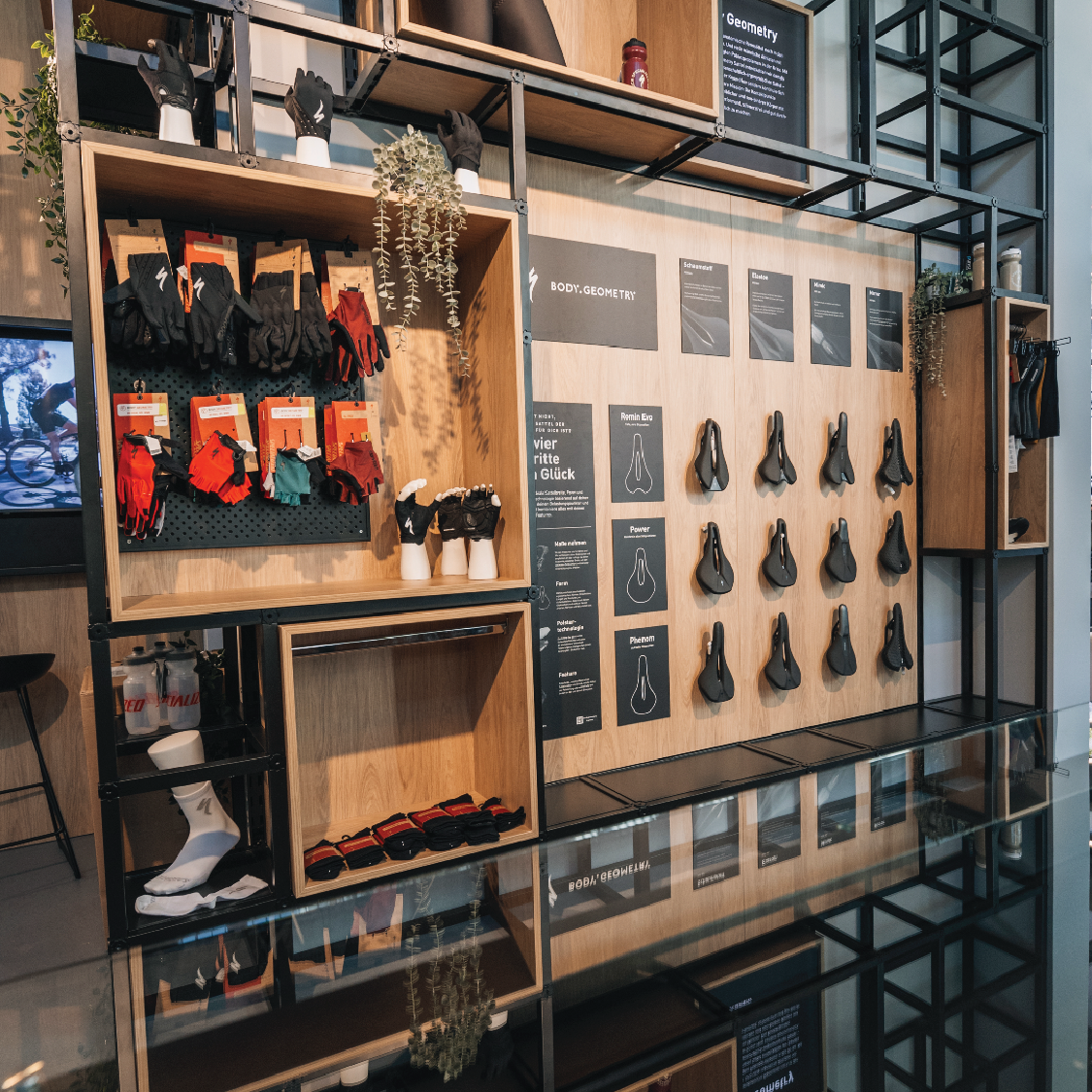
From there, I developed a scalable system built around clear product hierarchy, simplified messaging, visual storytelling, and modular merchandising. The framework organized complex product ranges into a more intuitive retail experience while allowing markets to adapt the system to their spaces and needs.
Graphic & Signage System Selects
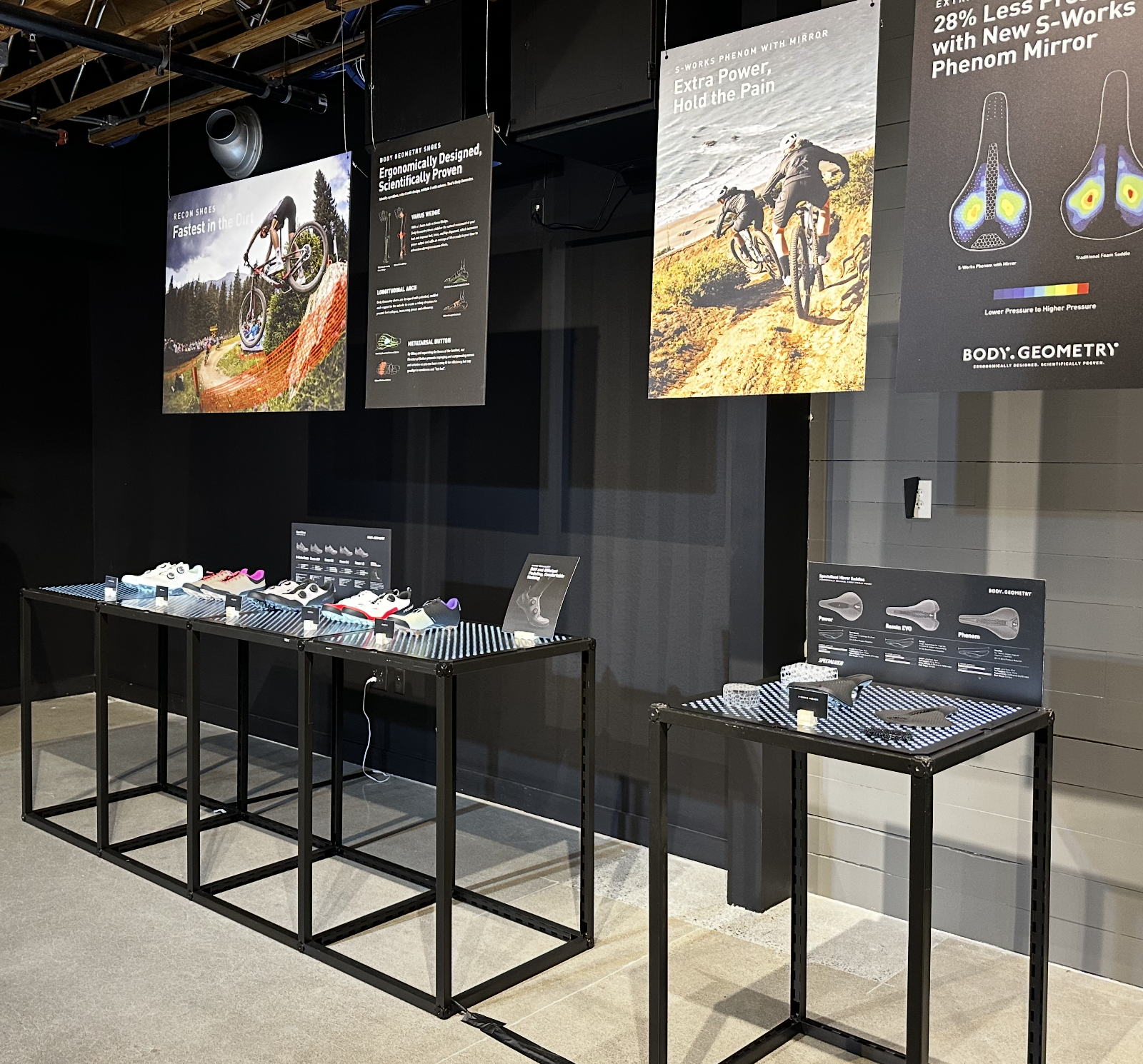
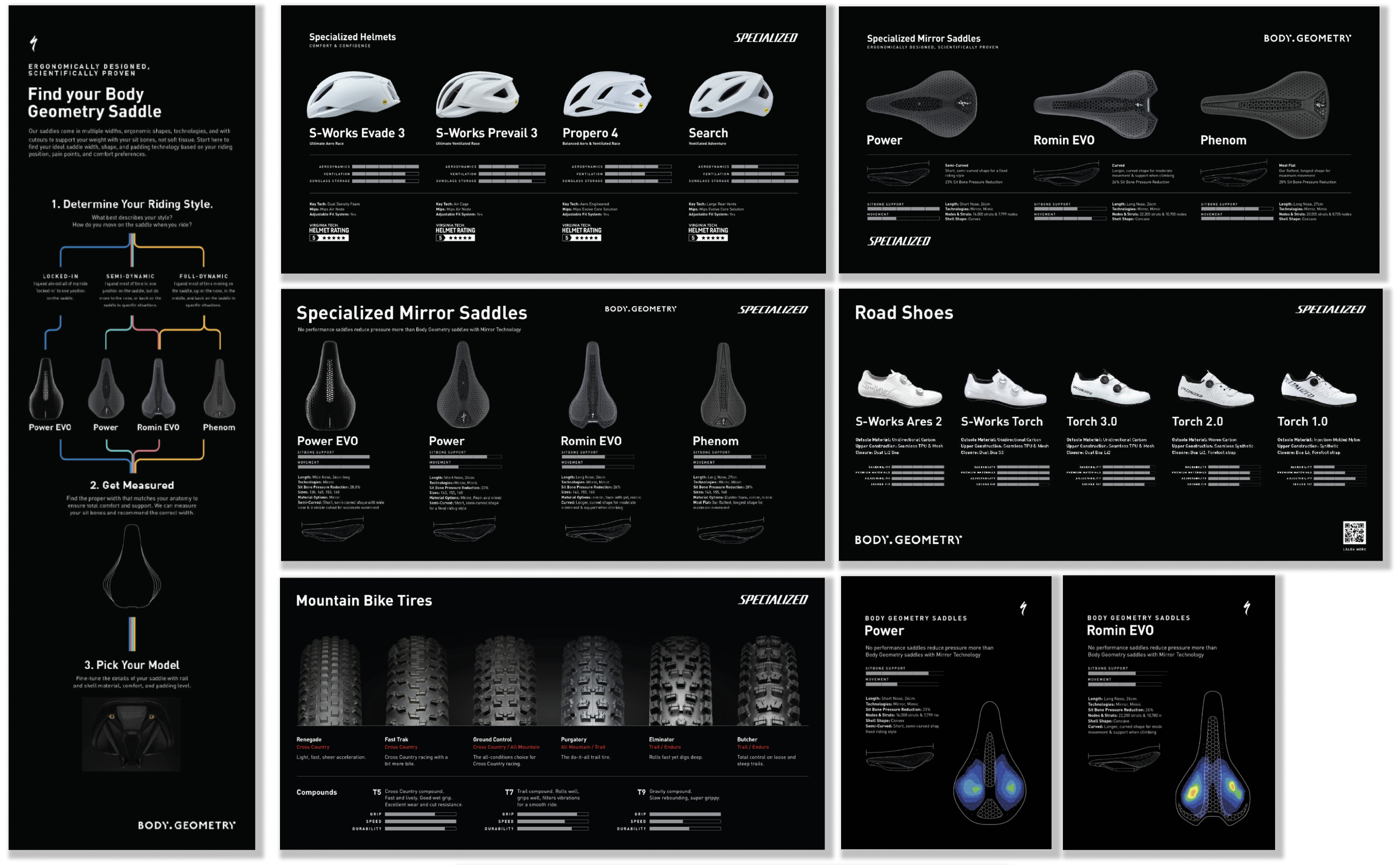
I directed the visual approach for the graphic and signage system, defining how product information, messaging, hierarchy, and visual storytelling would come together across the equipment categories. Below are selected examples of the system and its applications.
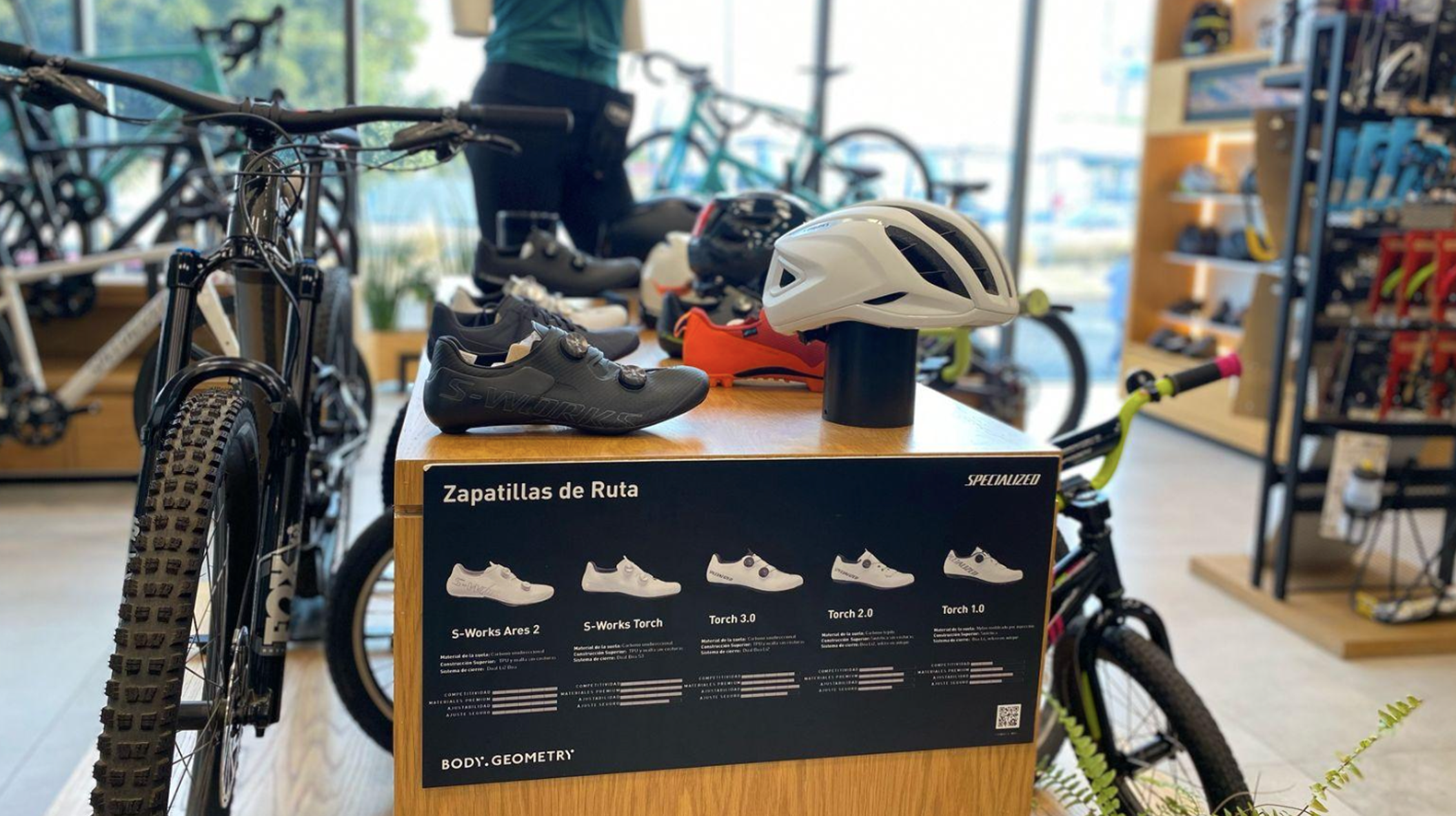
These differentiation charts were used in combination with other graphics to complete a full retail messaging system.
Here are a few examples of the differentiation charts:
Applied in the Retail Environment
The system was implemented by retail teams across global markets, with each region adapting the framework to its specific store environment, customer needs, and business goals. The result was a more organized, elevated retail experience that made equipment easier to navigate and understand, with feedback from retail teams and riders reflecting greater confidence in exploring and comparing products.
The framework also extended beyond retail, influencing how the brand communicated about products across internal trade shows, presentations, and consumer facing digital experiences. What began as a retail communication system became a broader approach to organizing and telling product stories across the brand.