Equipment Communication System
I developed a new approach to how complex product information was communicated at retail, with the goal of making it easier for riders to understand their options and make confident decisions.
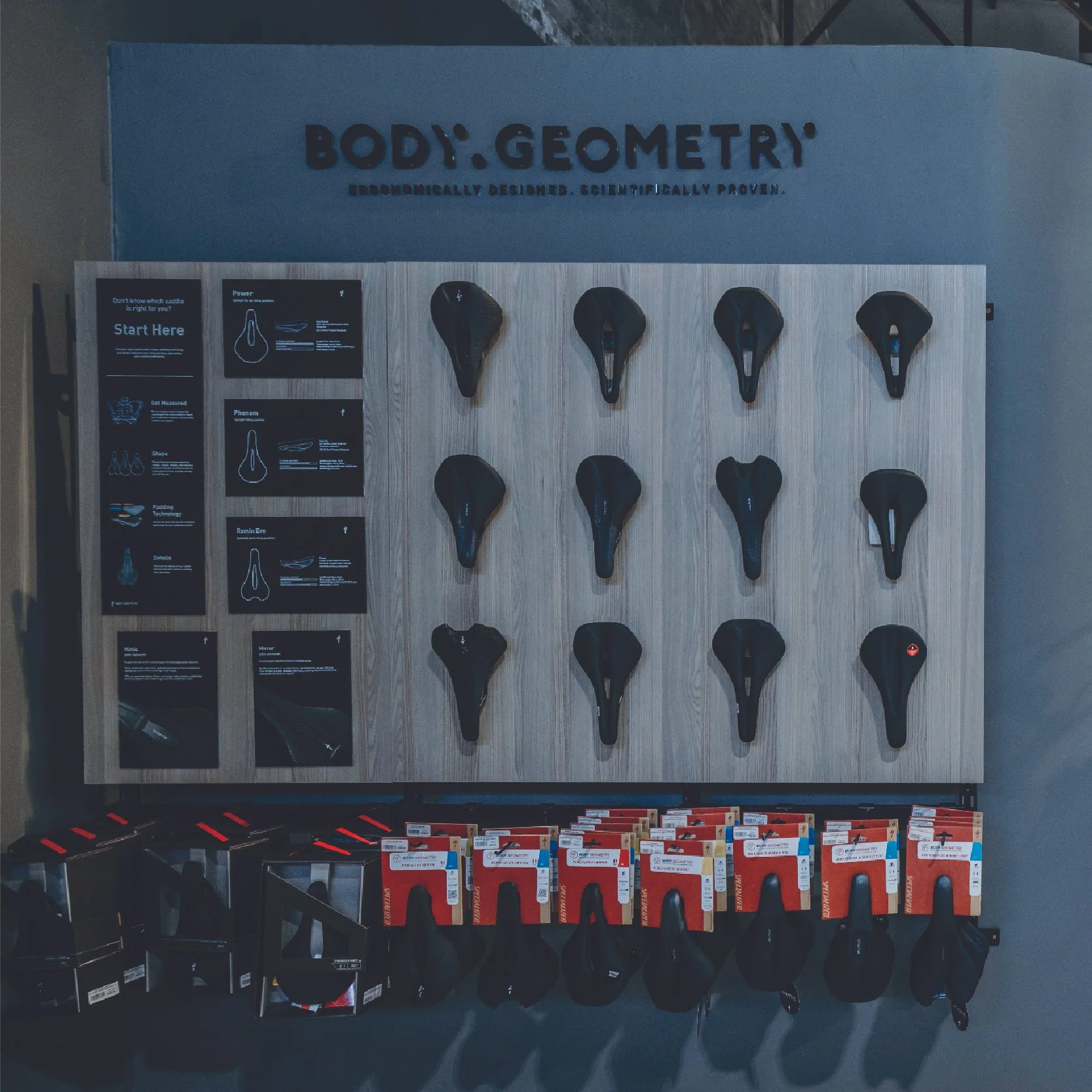
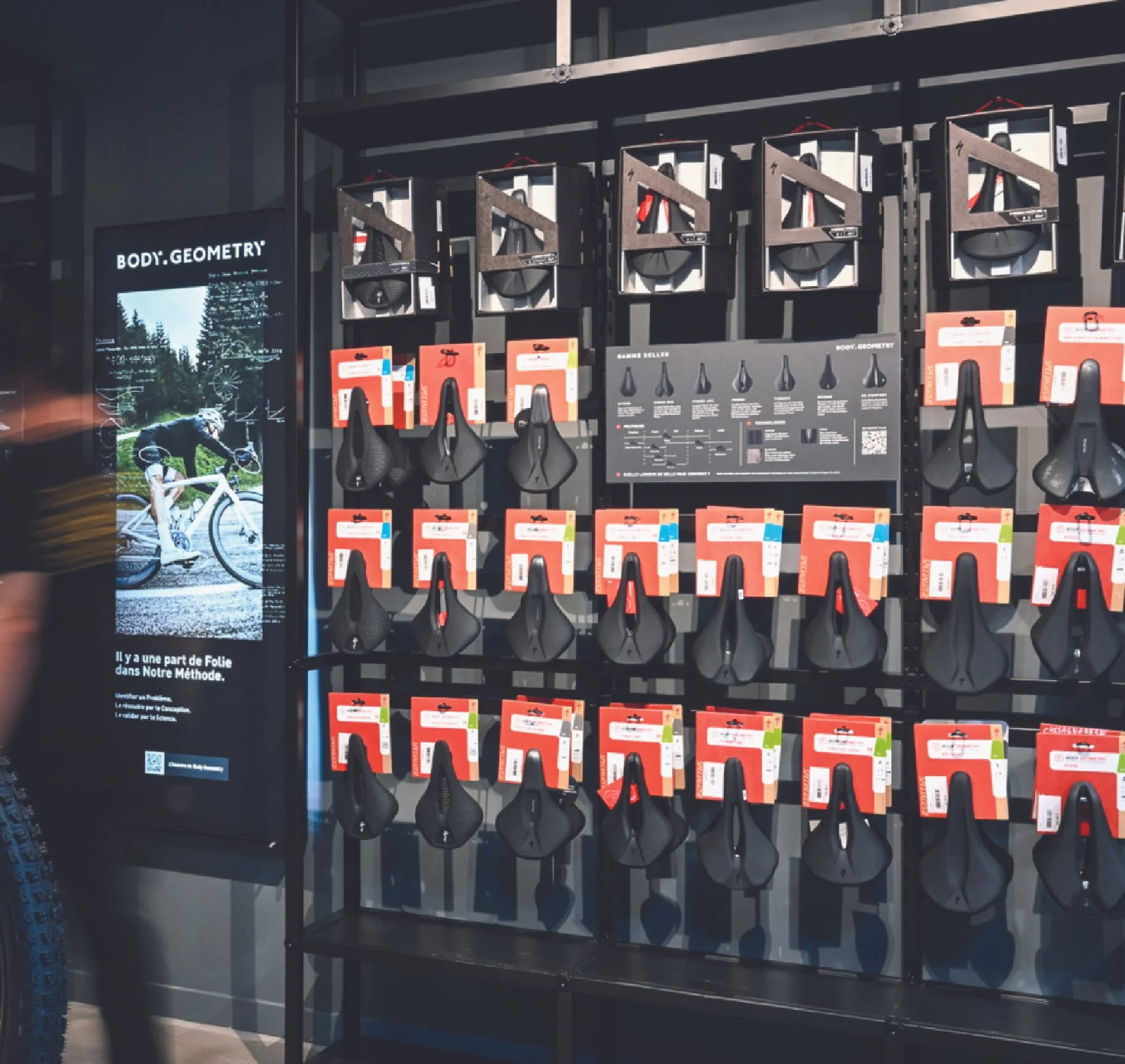
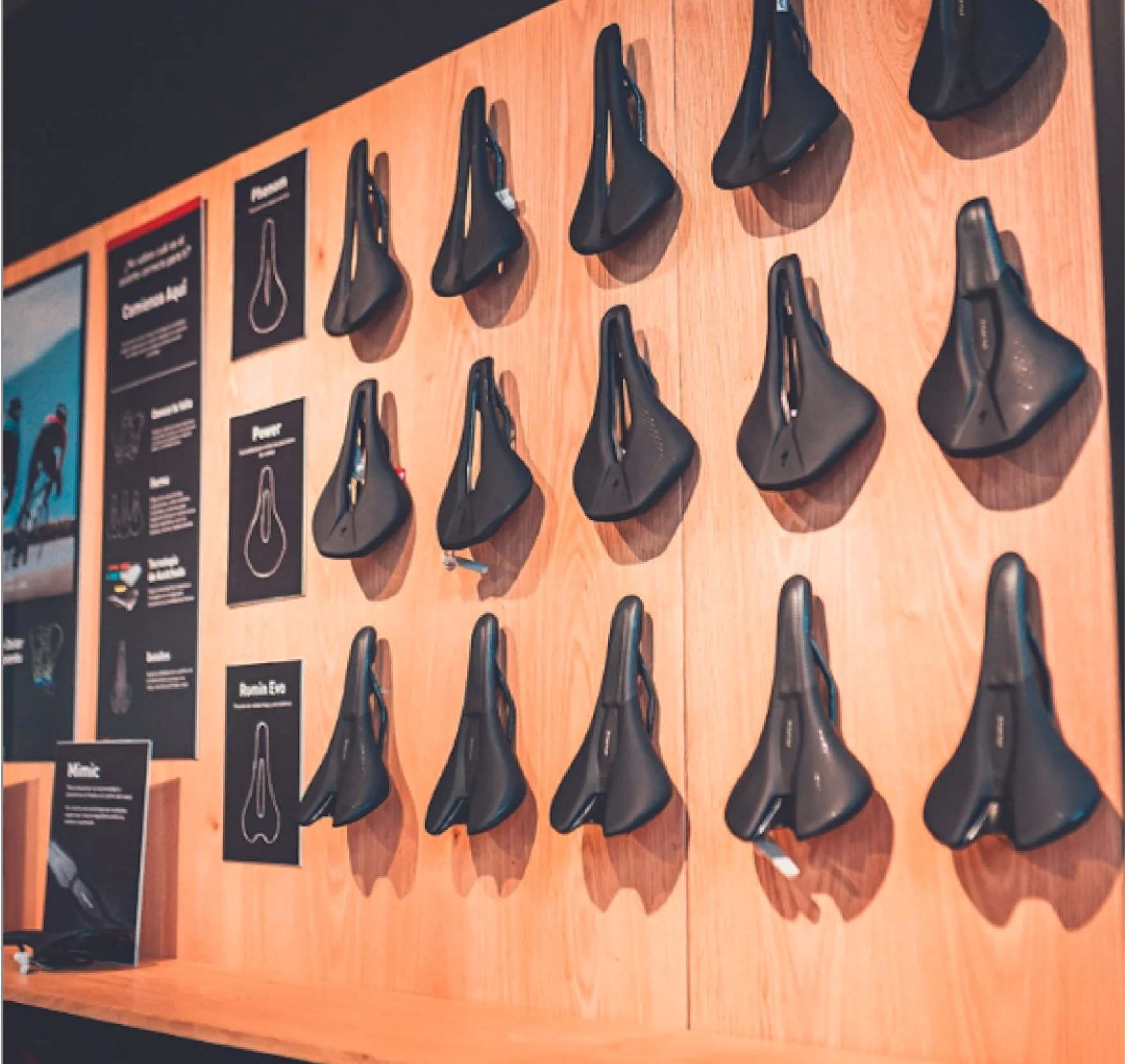
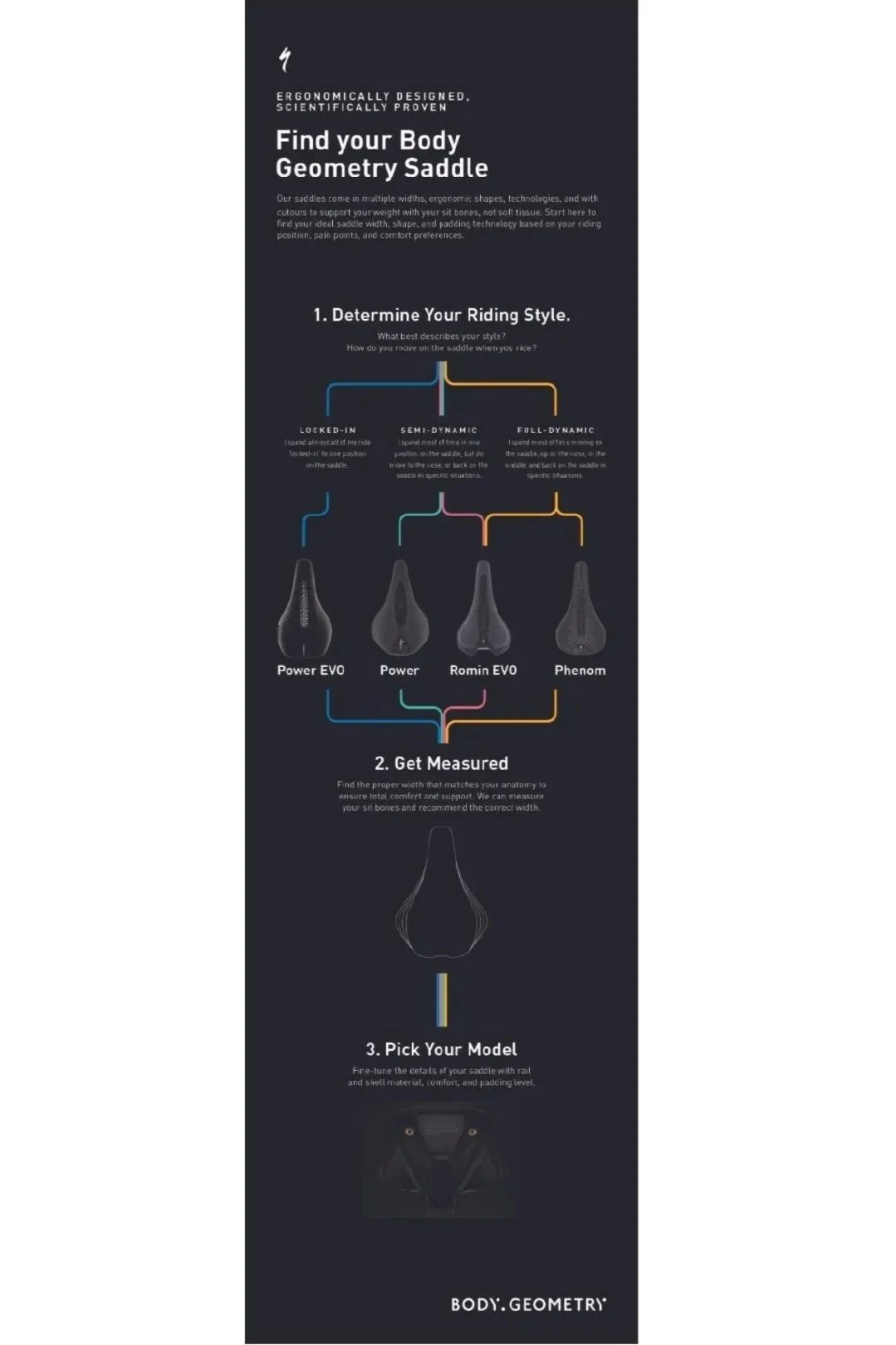
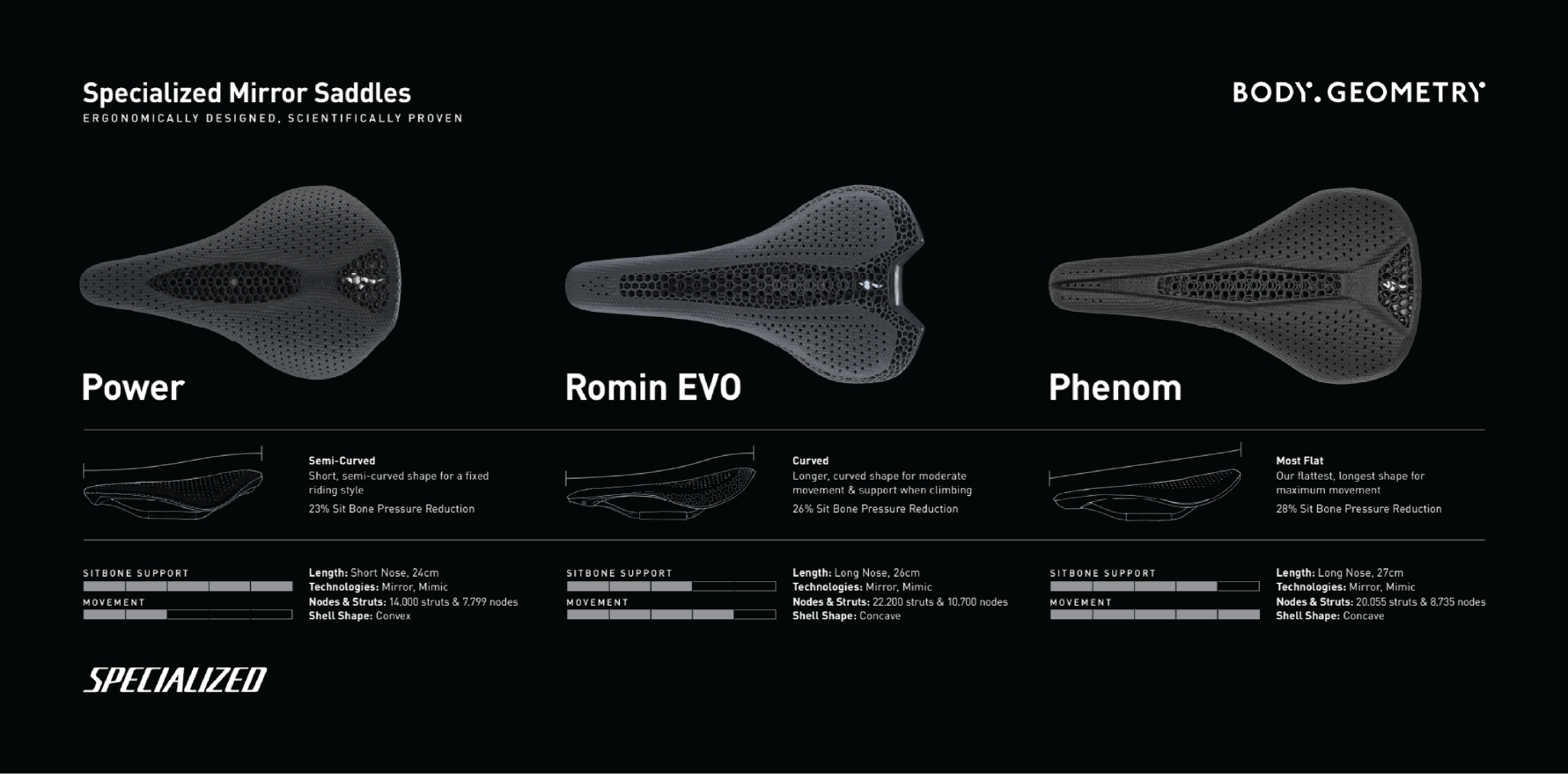
The work began with the Saddle Innovation Wall, an initiative I identified and led from strategy through global implementation. I developed the information hierarchy, customer experience approach, and scalable system, working with cross-functional teams to translate the strategy into a physical retail experience.
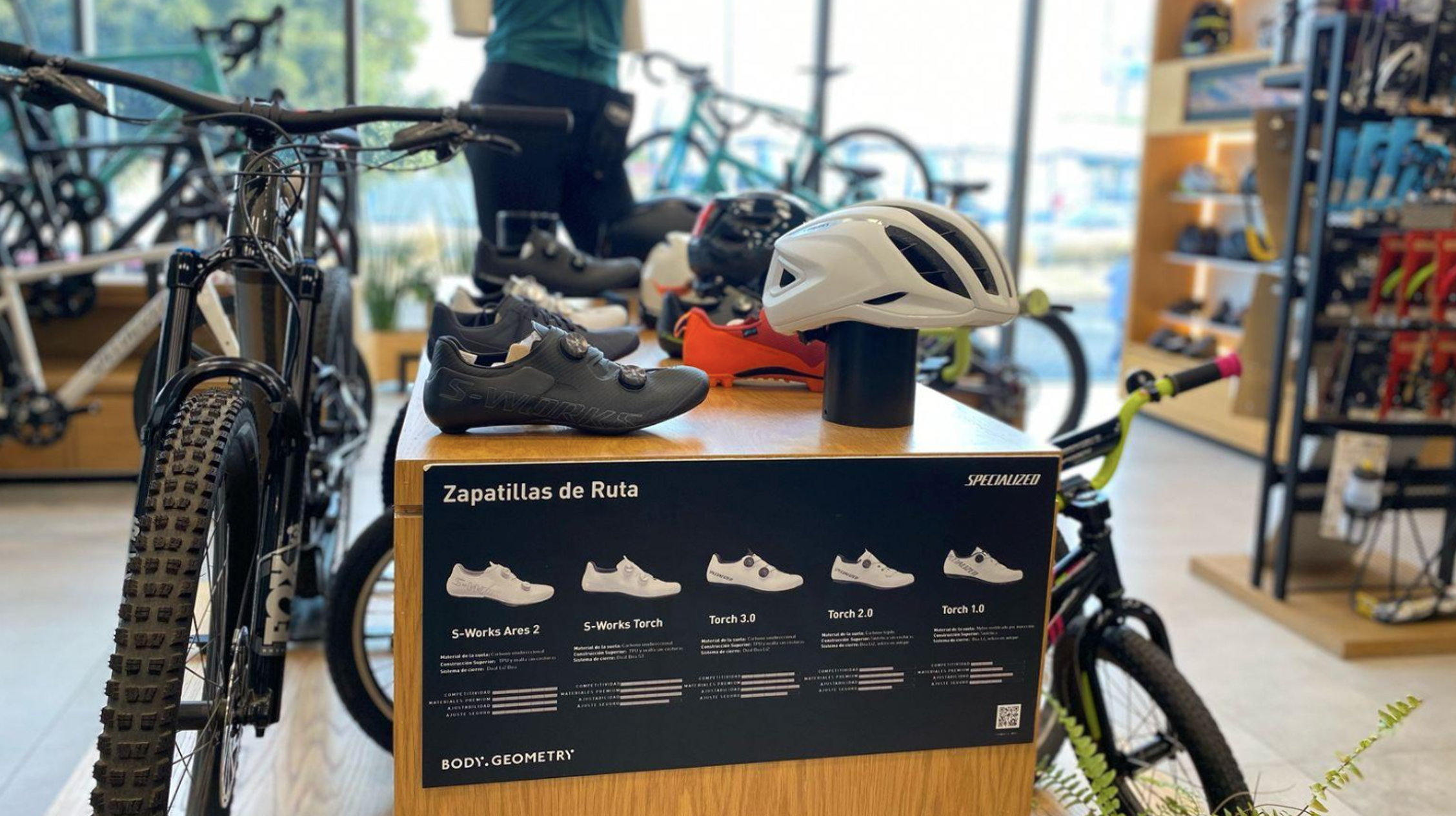
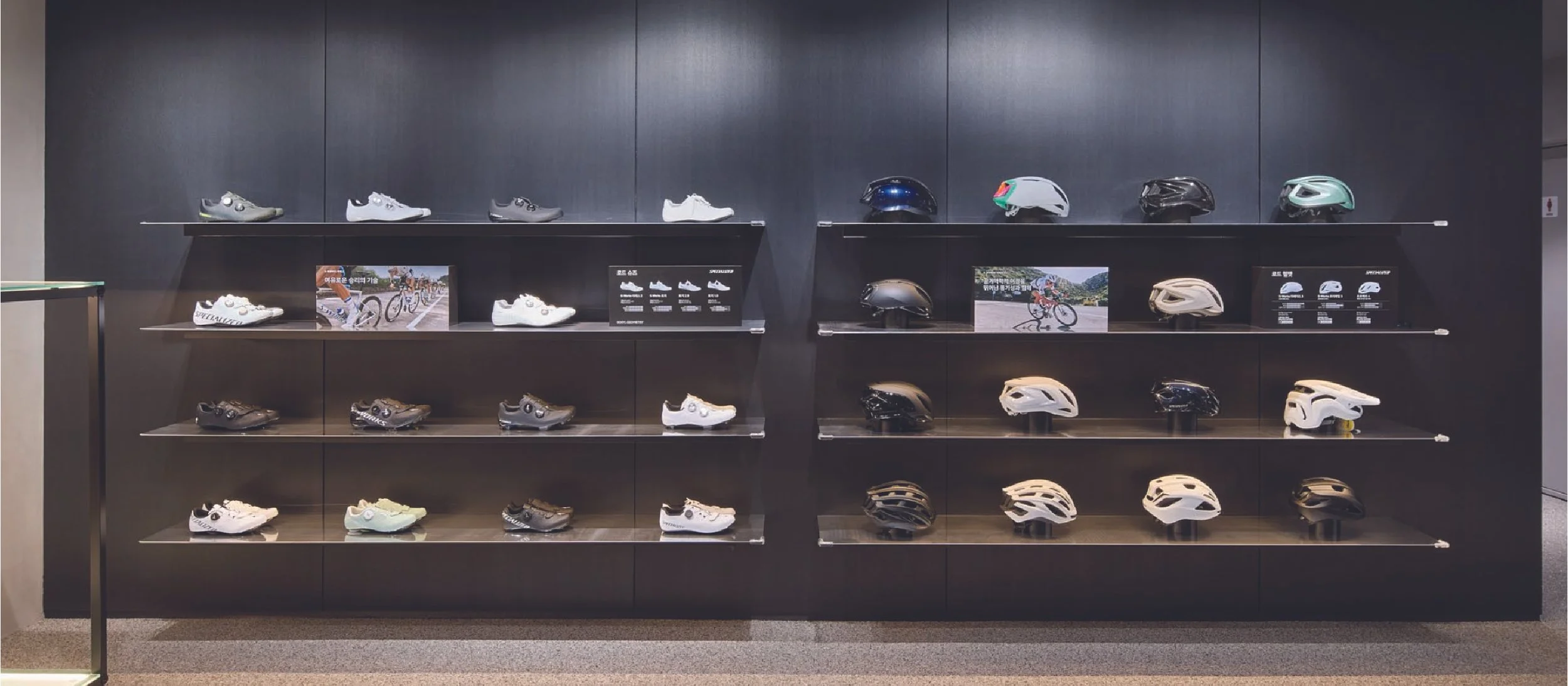
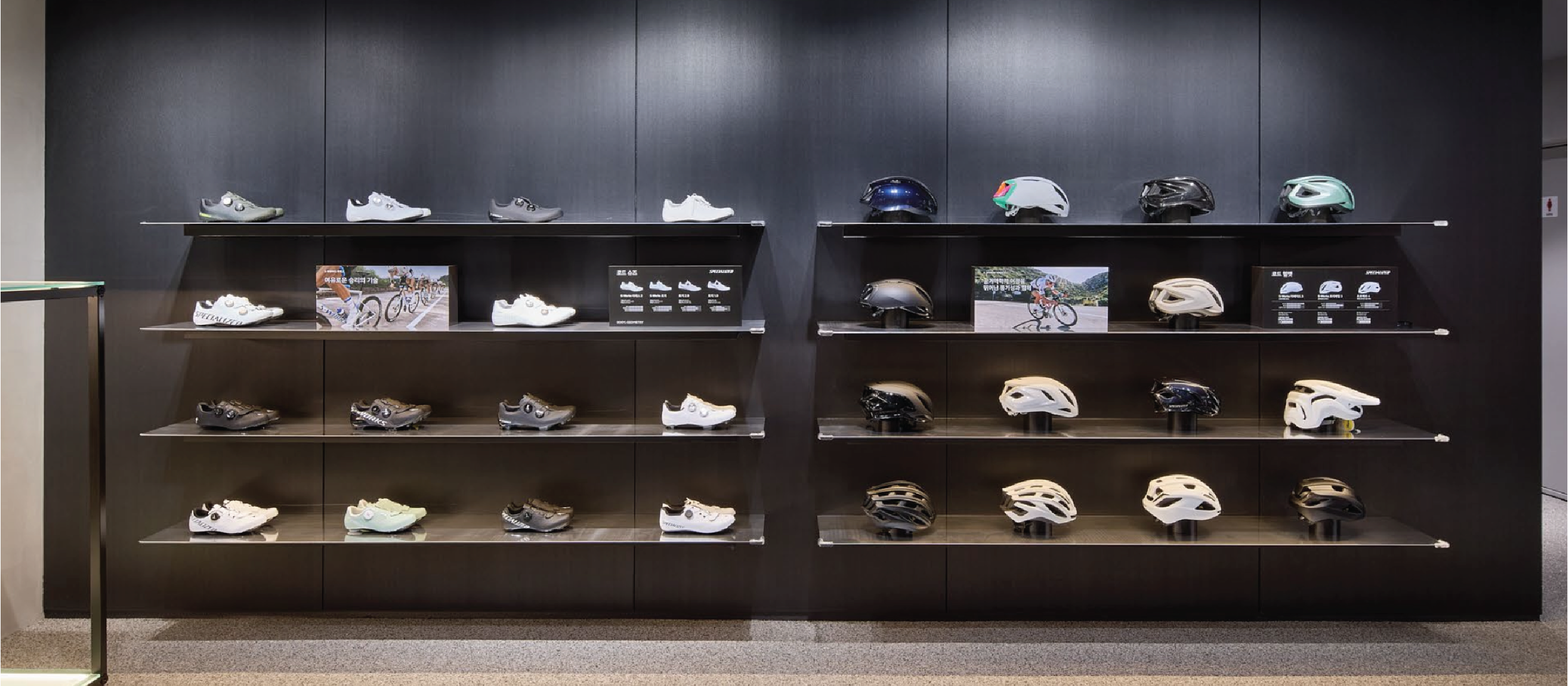
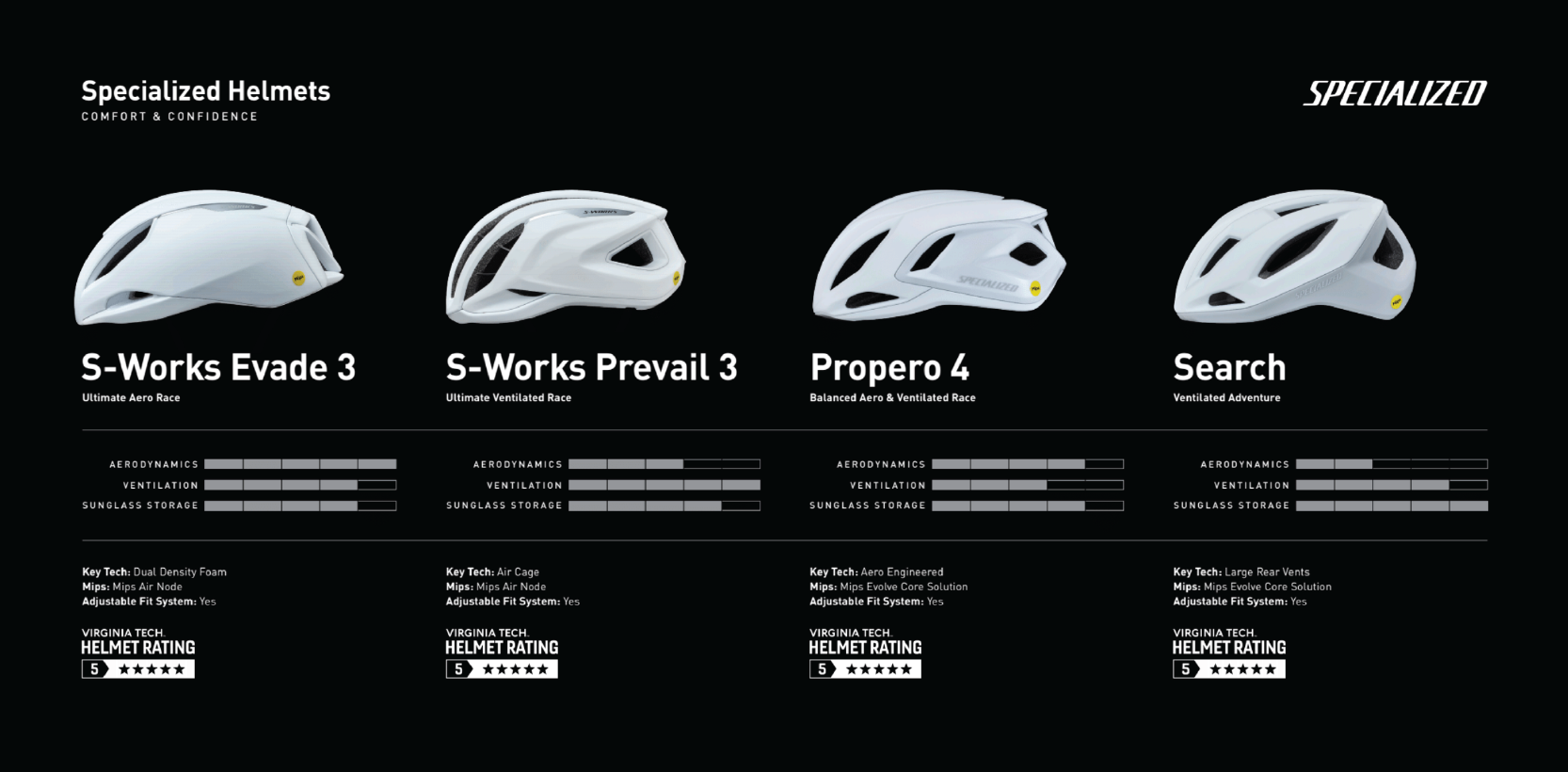
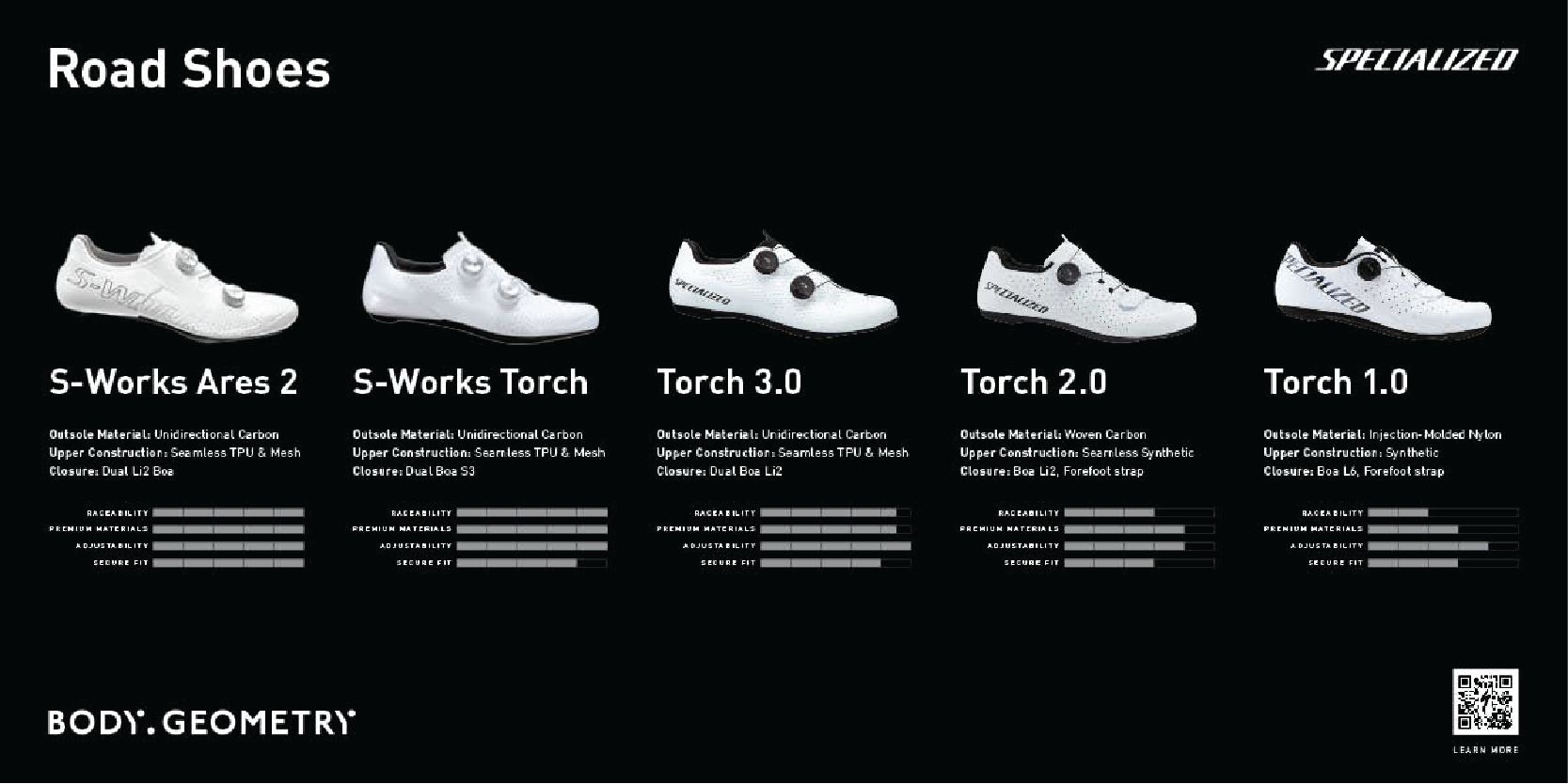
I later applied the same thinking to equipment differentiation, creating a visual system that made complex product differences easier to understand at a glance.
My Role: Strategy · Information Architecture · Creative Direction · CX Strategy · Creative Direction: Established the visual direction, messaging hierarchy, and overall approach in collaboration with the global creative and retail teams.
01 | The Challenge
In-store saddle and equipment displays were inconsistent, cluttered, and hard to navigate. Saddles, shoes, tires, and helmets of vastly different value, technologies, and attributes were often grouped together, and staff lacked tools to confidently guide riders to the best equipment for their needs. This resulted in confused shoppers, low demo engagement, and missed opportunities to showcase innovation and storytelling.
02 | The Opportunity
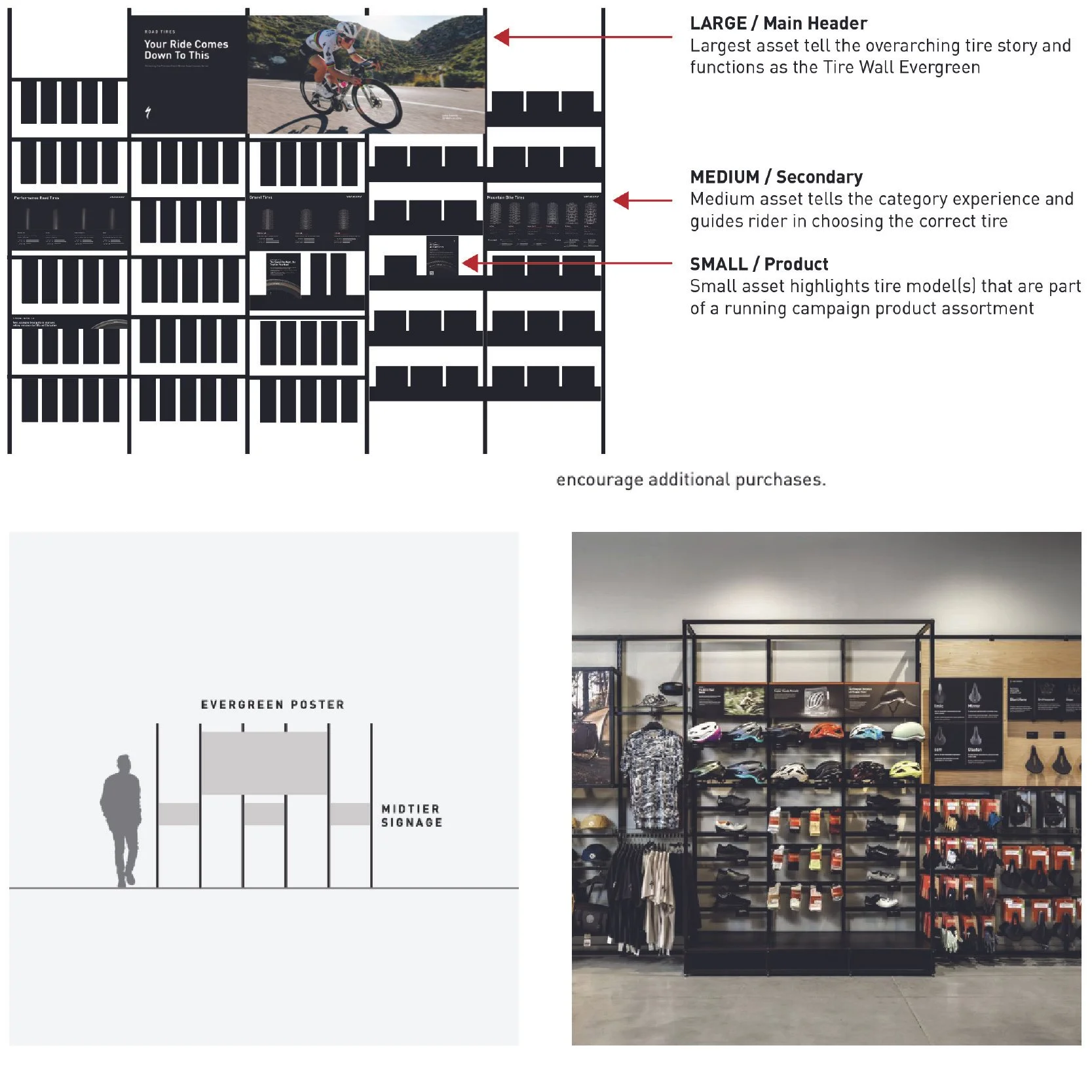
I saw an opportunity to create a clearer path through the information: helping riders understand what mattered by simplifying complex technology stories into clear, quickly digestible graphics riders could understand at a glance, while creating a visual hierarchy system to tell brand and product stories.
The system also needed to work across different store environments and markets, giving local teams enough flexibility to adapt while maintaining a consistent brand experience.
03 | The System
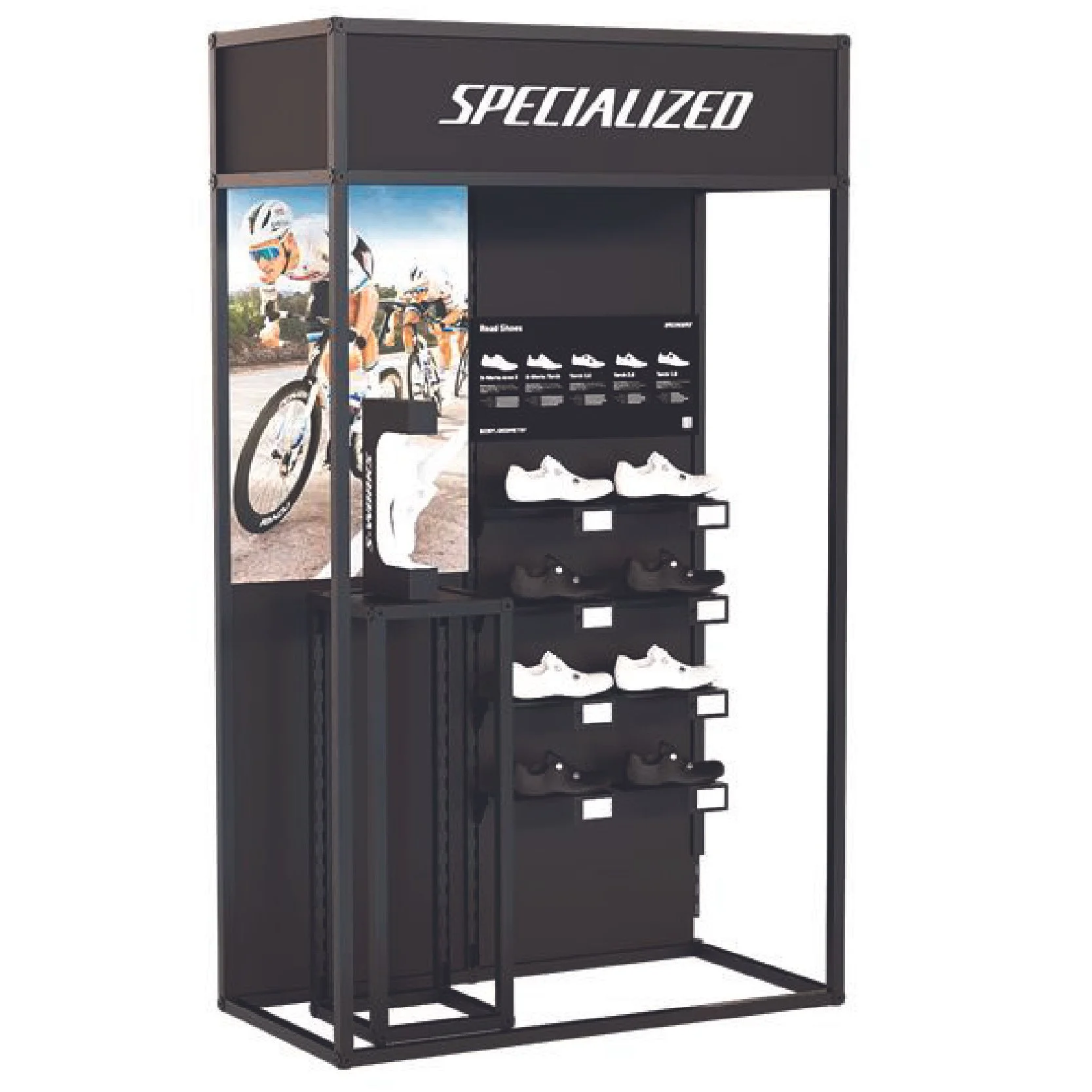
I developed a framework for how Specialized's equipment categories could be presented and understood at retail, starting with saddles and expanding across shoes, helmets, and tires. I audited stores across the U.S., Germany, and the Netherlands and gathered feedback from store teams, shoppers, and riders to identify gaps in product communication and merchandising.
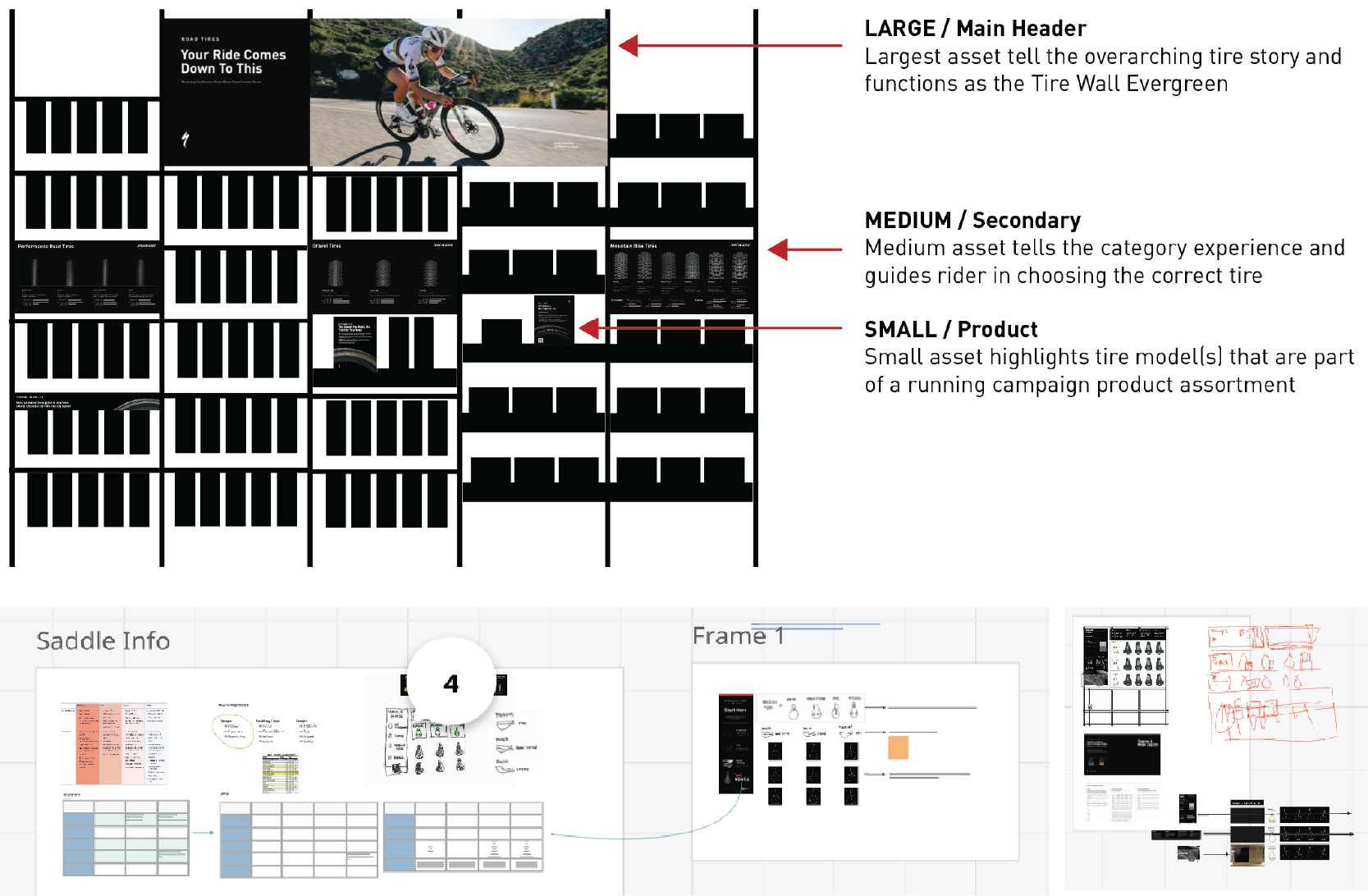
From there, I developed a scalable system built around clear product hierarchy, simplified messaging, visual storytelling, and modular merchandising. The framework created a more cohesive experience across stores while allowing markets to adapt it to their spaces and needs.
Graphic & Signage System Selects
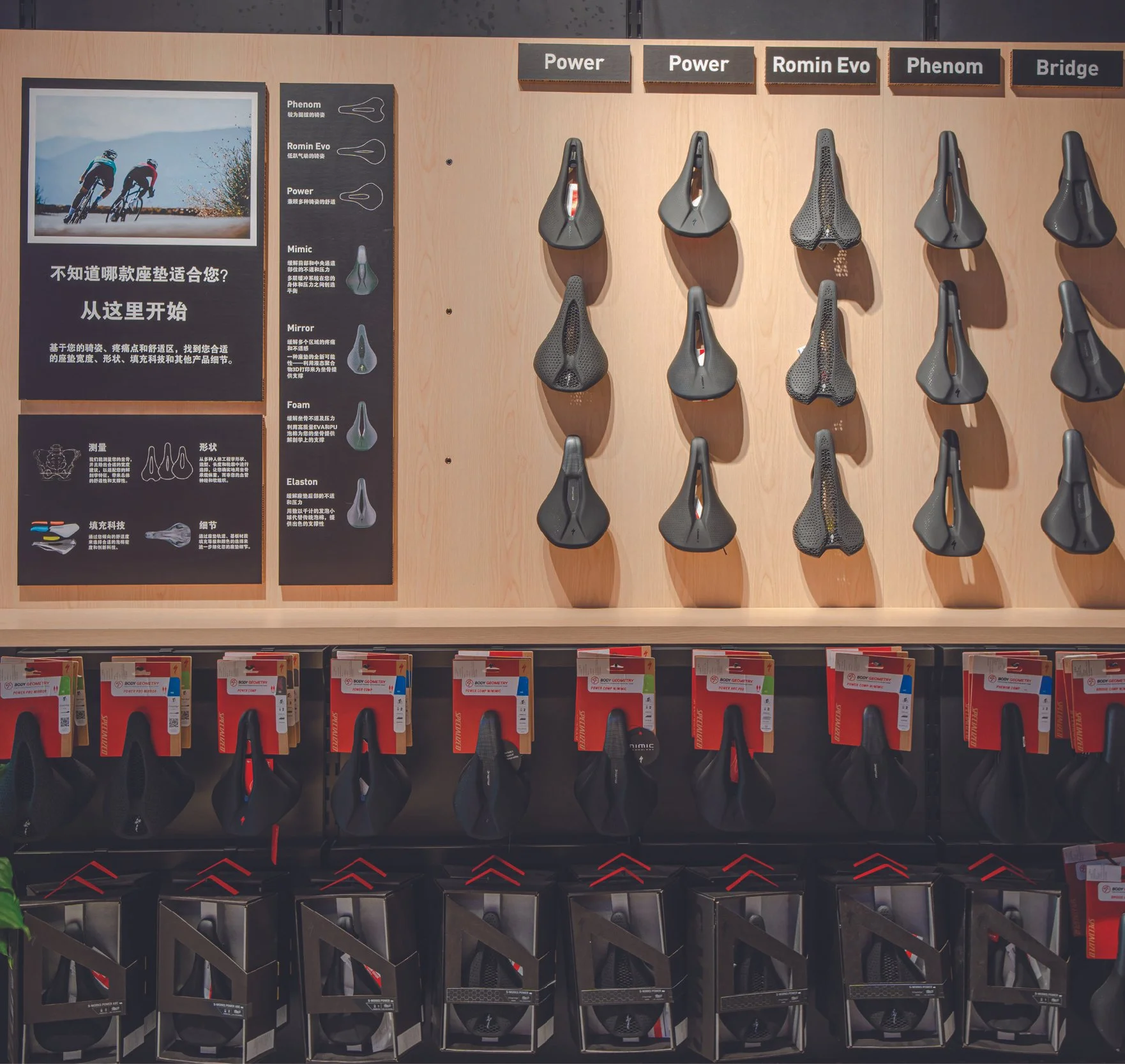
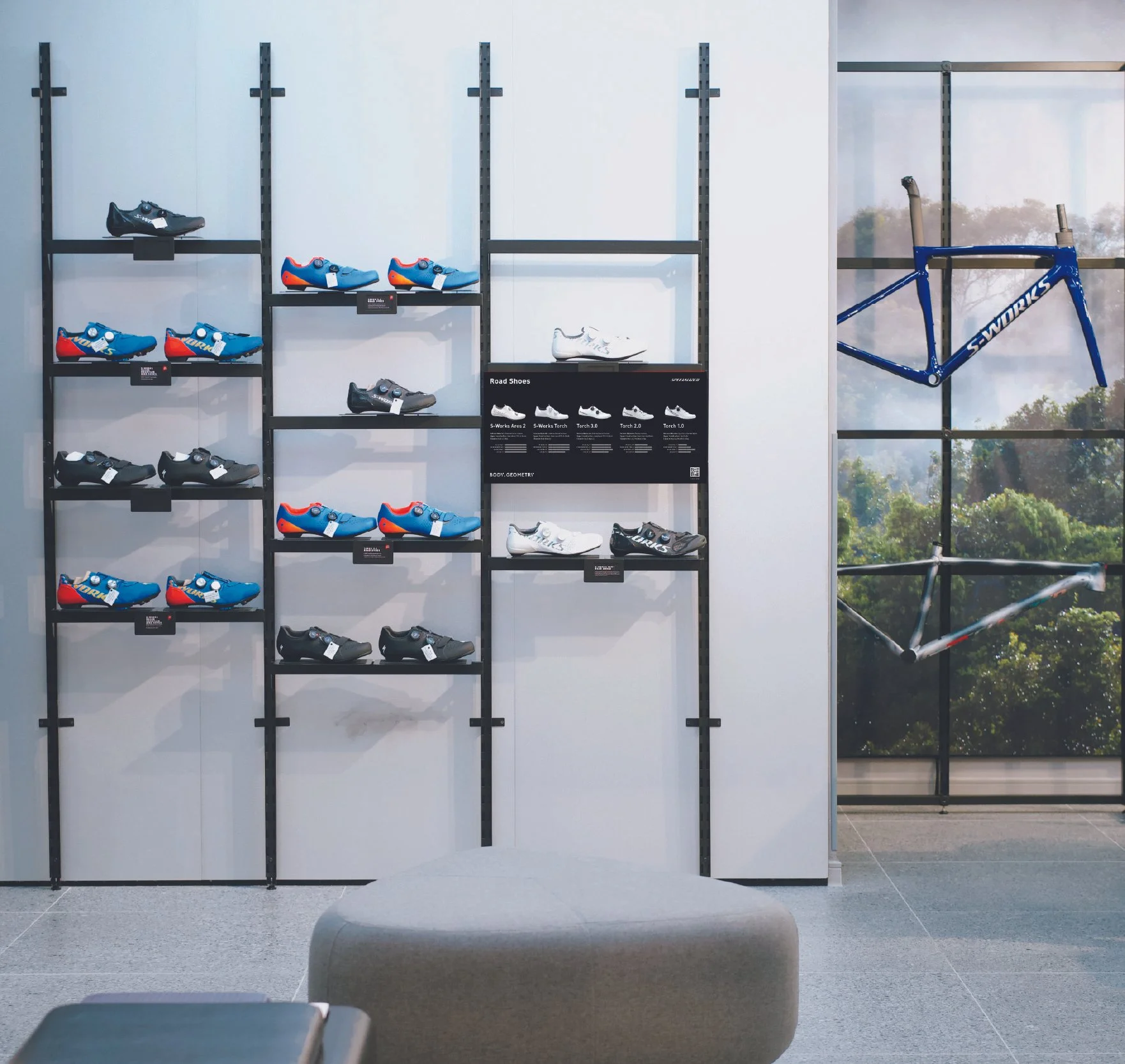
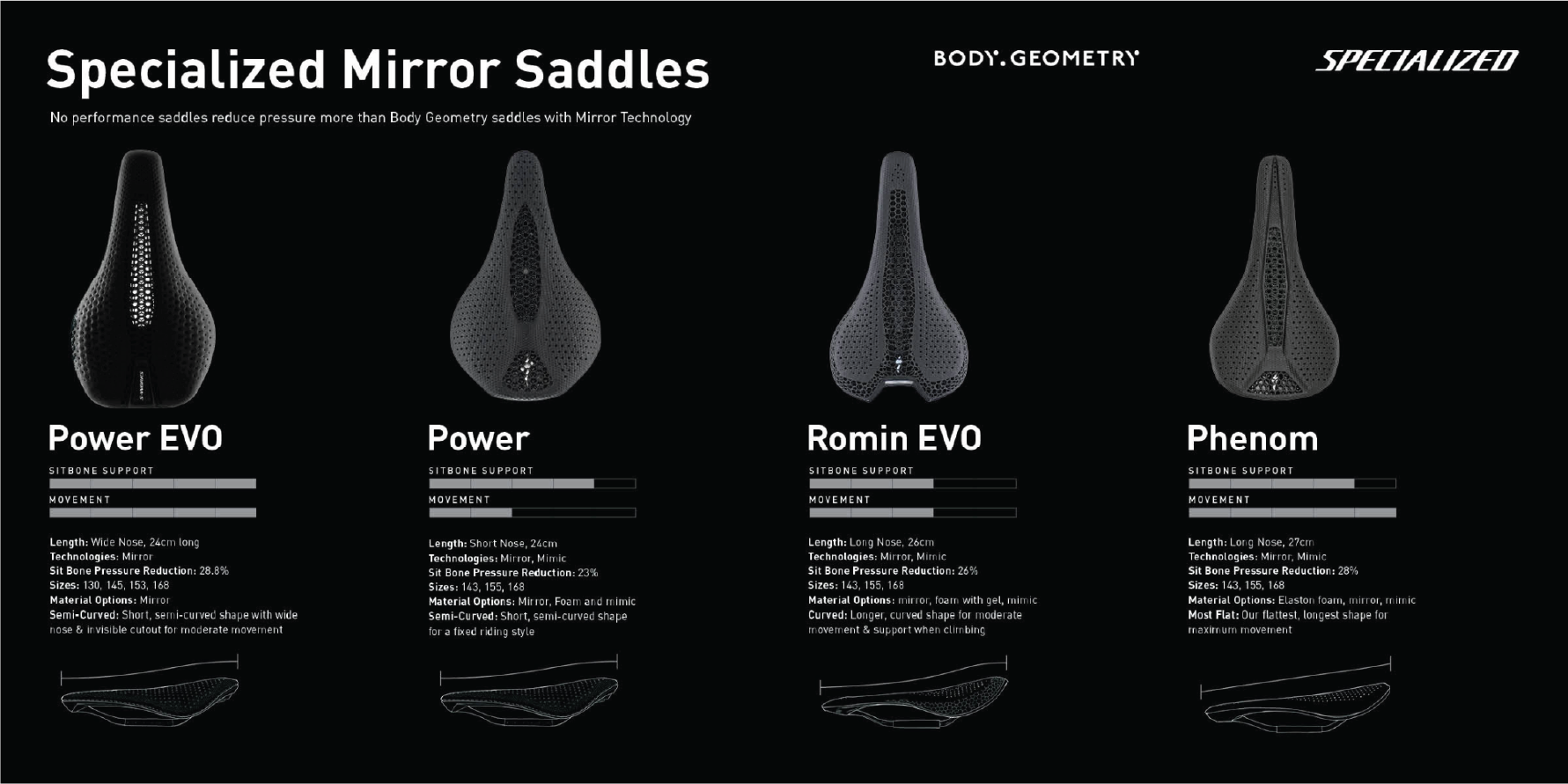
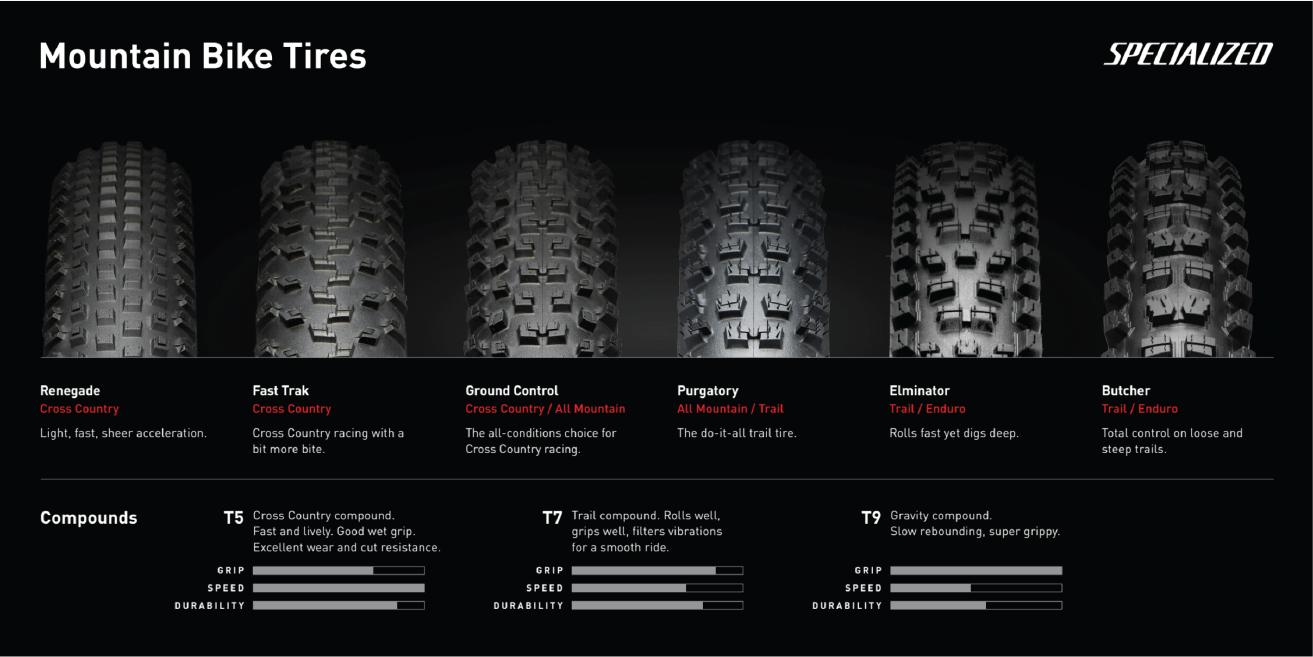
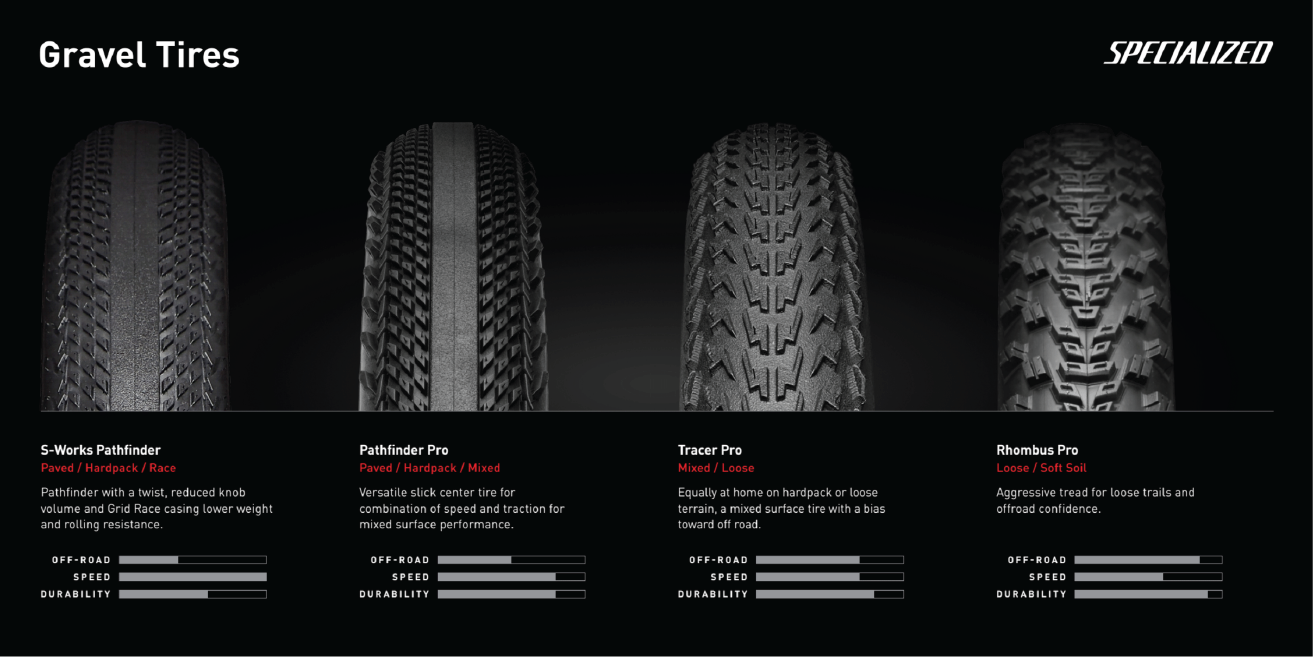
I directed the visual approach for the graphic and signage system, defining how product information, messaging, hierarchy, and visual storytelling would come together across the equipment categories. Below are selected examples of the system and its applications.
Applied in the Retail Environment
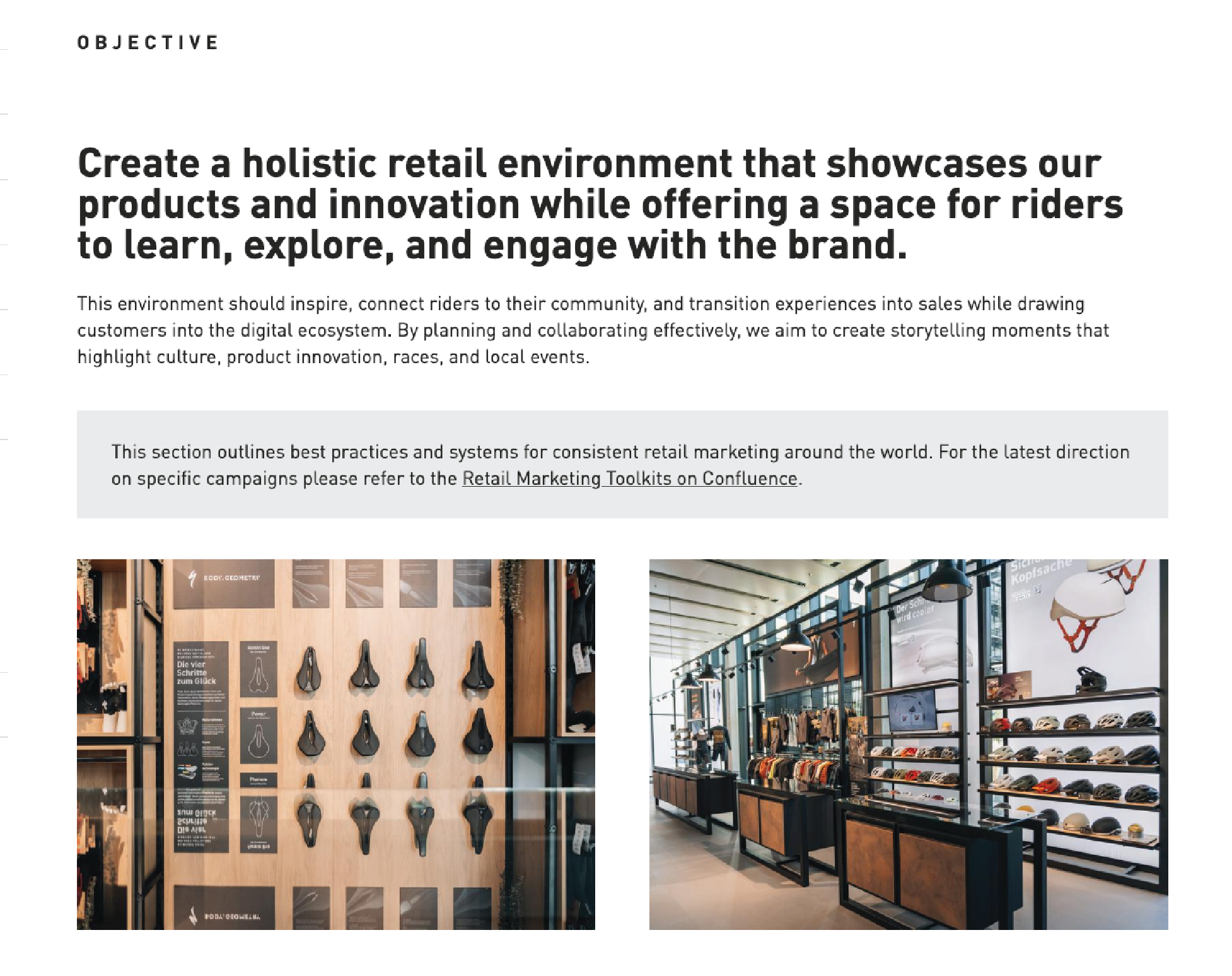
The system was implemented by retail teams across global markets, with each region adapting the framework to its specific store environment, customer needs, and business goals. The result was a more organized, elevated retail experience that made equipment easier to navigate and understand, with feedback from retail teams and riders reflecting greater confidence in exploring and comparing products.
The framework also extended beyond retail, influencing how the brand communicated about products across internal trade shows, presentations, and consumer facing digital experiences. What began as a retail communication system became a broader approach to organizing and telling product stories across the brand.